
Robot Car was an early byitl project — a tabletop-scale autonomous rover built to learn what it takes to put real-time computer vision on a moving platform, without dragging a laptop around behind it.
The build
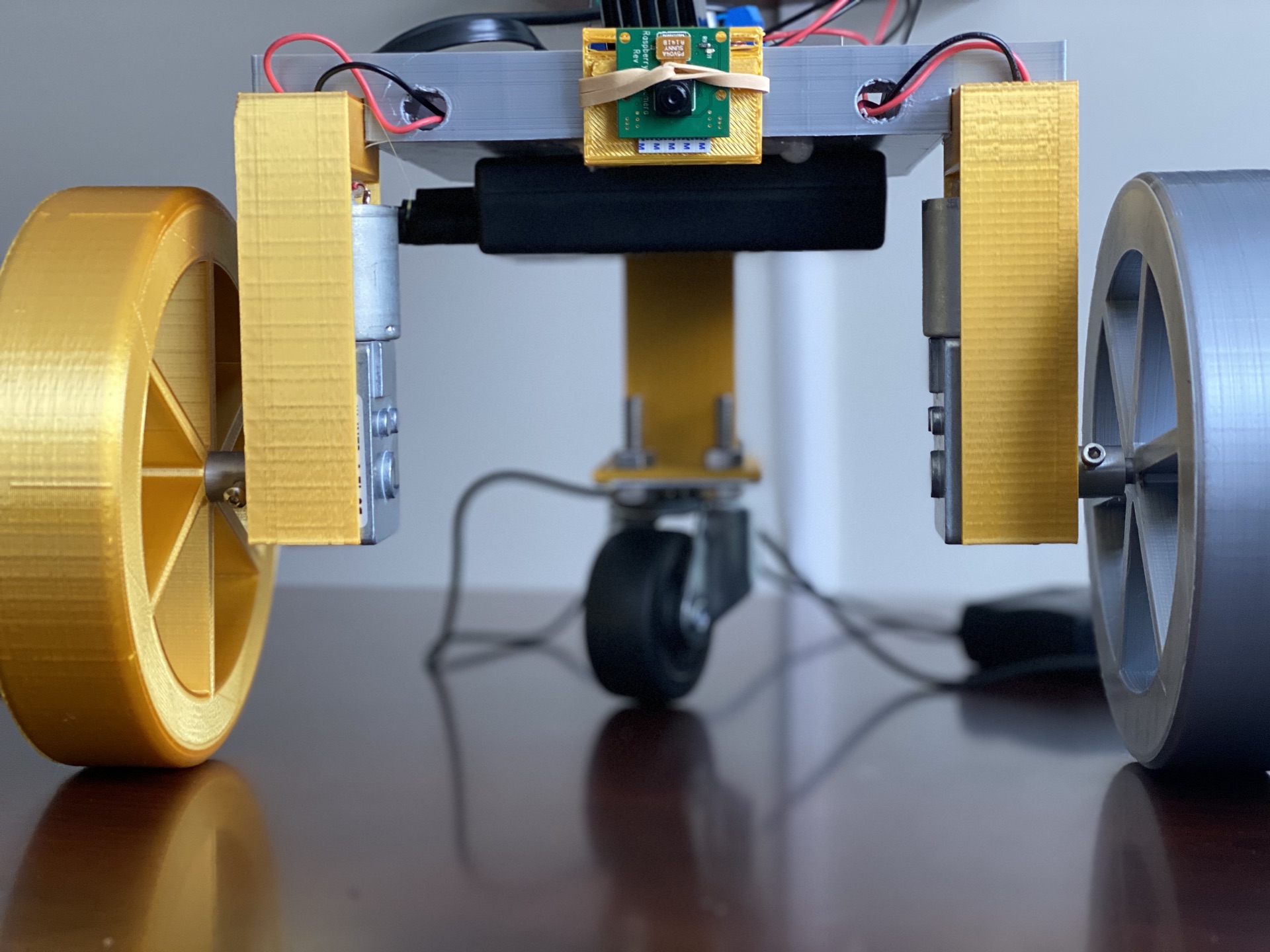
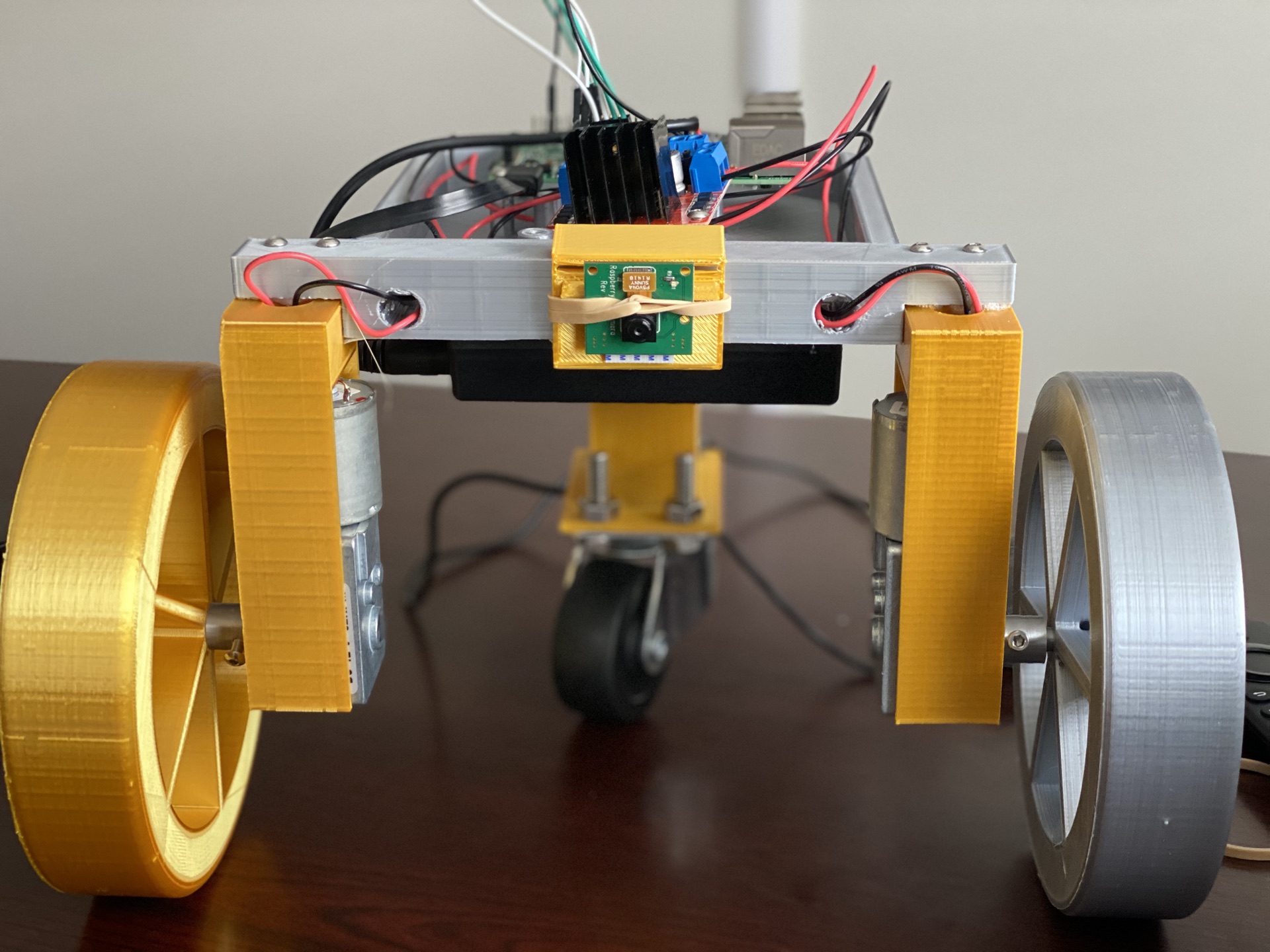
The first iteration was three wheels: two rear driven wheels, a caster up front, a Raspberry Pi with the standard camera module rubber-banded to the top, and a pair of yellow gear motors running off a basic H-bridge. Frames streamed back to a laptop over Wi-Fi for OpenCV work — object tracking, line following, that class of thing. Simple, but it was our first "the code sees what the world is doing" moment.
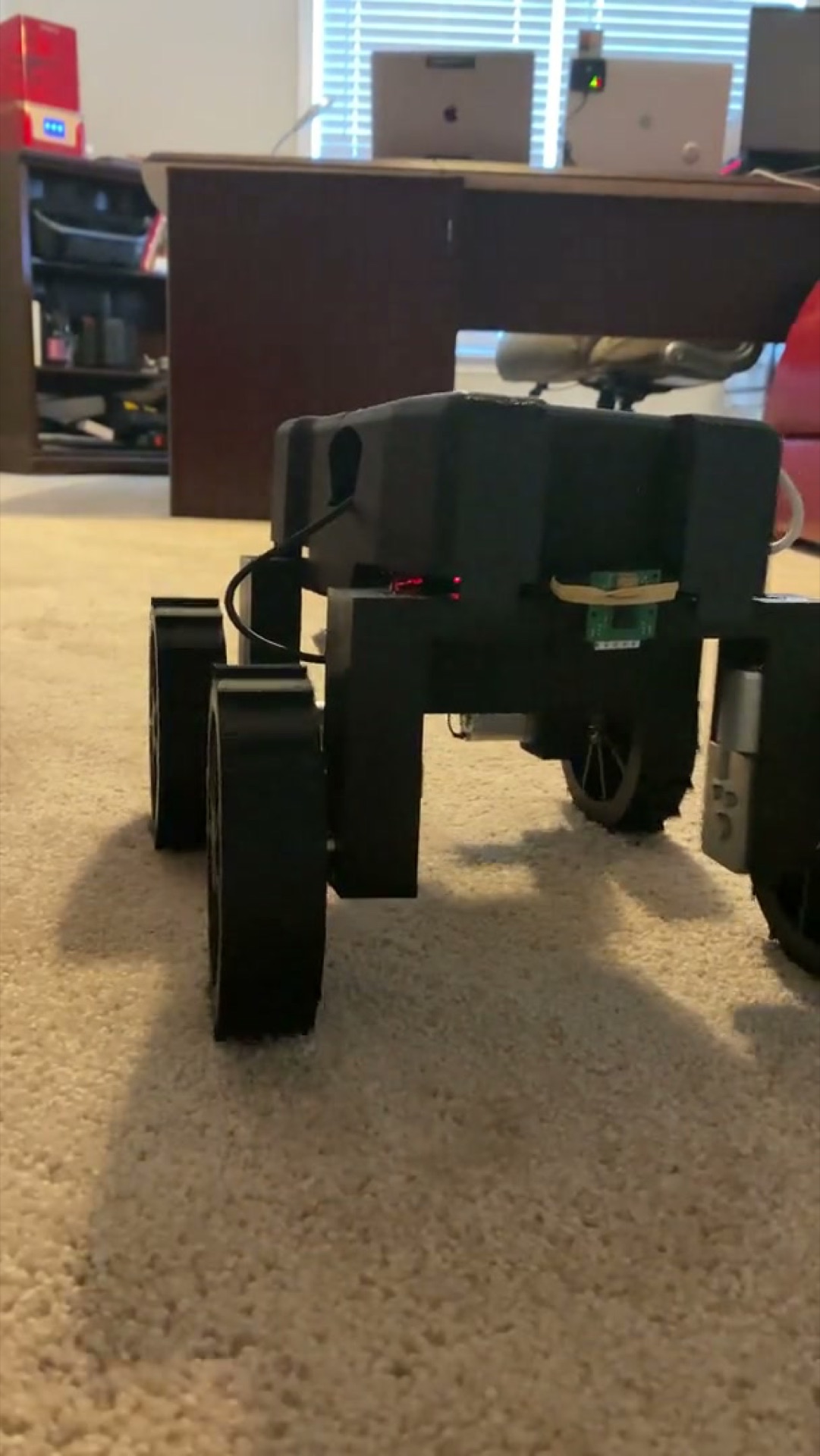
The second iteration added a Google Coral USB Accelerator alongside the Pi and traded the caster for a proper four-wheel drivetrain. With the Edge TPU handling inference on-device, the rover no longer needed the streaming-to-laptop crutch — it ran classification and detection at real-time frame rates completely stand-alone, which was the whole point of building it.
What we learned
Two things. First: getting the mechanicals right — motor mounts, wheel alignment, camera stiffness — took as long as the vision code. A flexy 3D-printed part will kill your detection consistency long before your model does. Second: the Coral was excellent for its era, but the interesting work — motor drivers, PCB fit, chassis serviceability — always came back to enclosure design.
That pattern kept repeating across our early prototypes, which is why byitl now designs the board, firmware and enclosure as one job. Robot Car was one of the builds that made the case.