
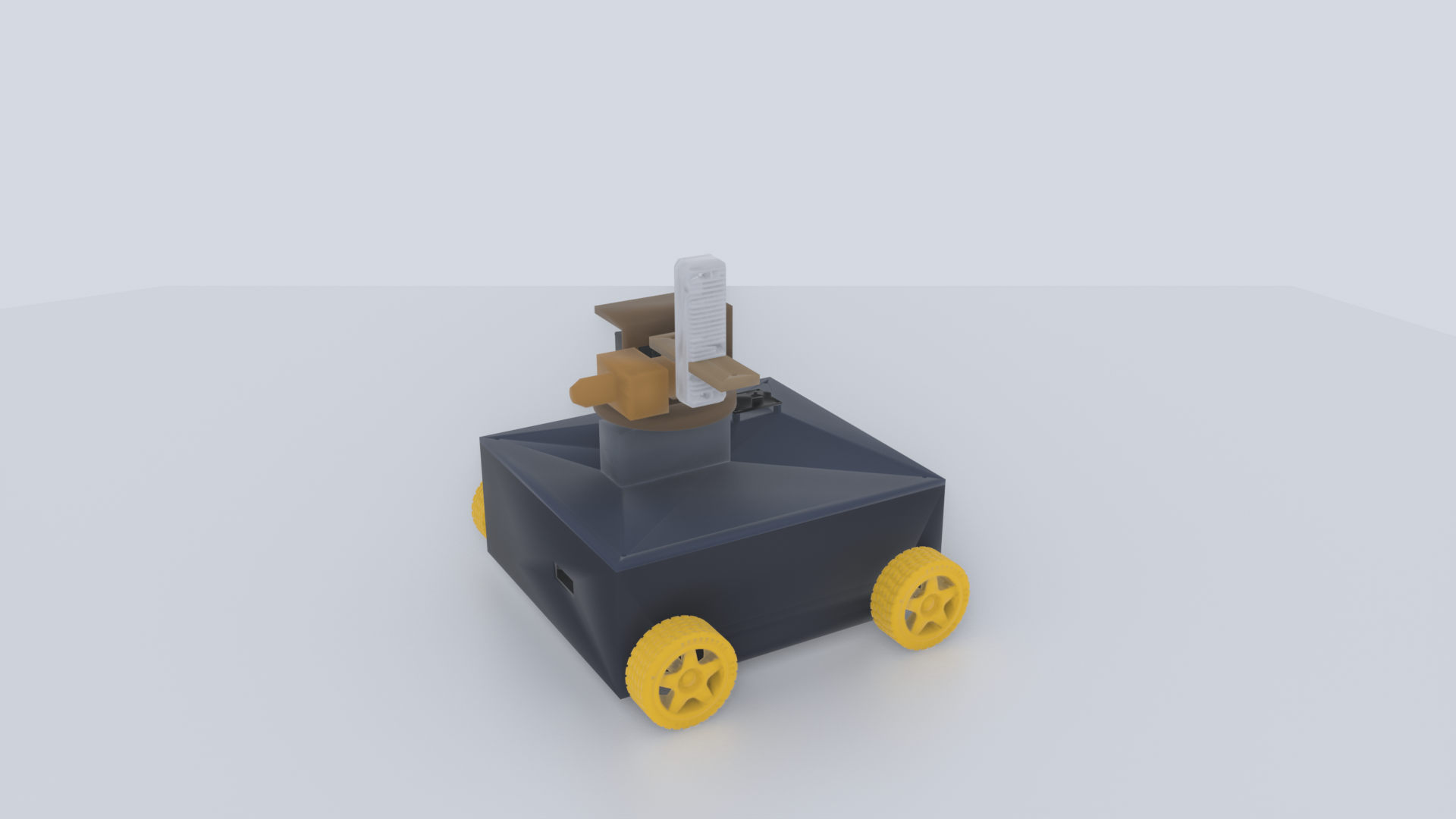
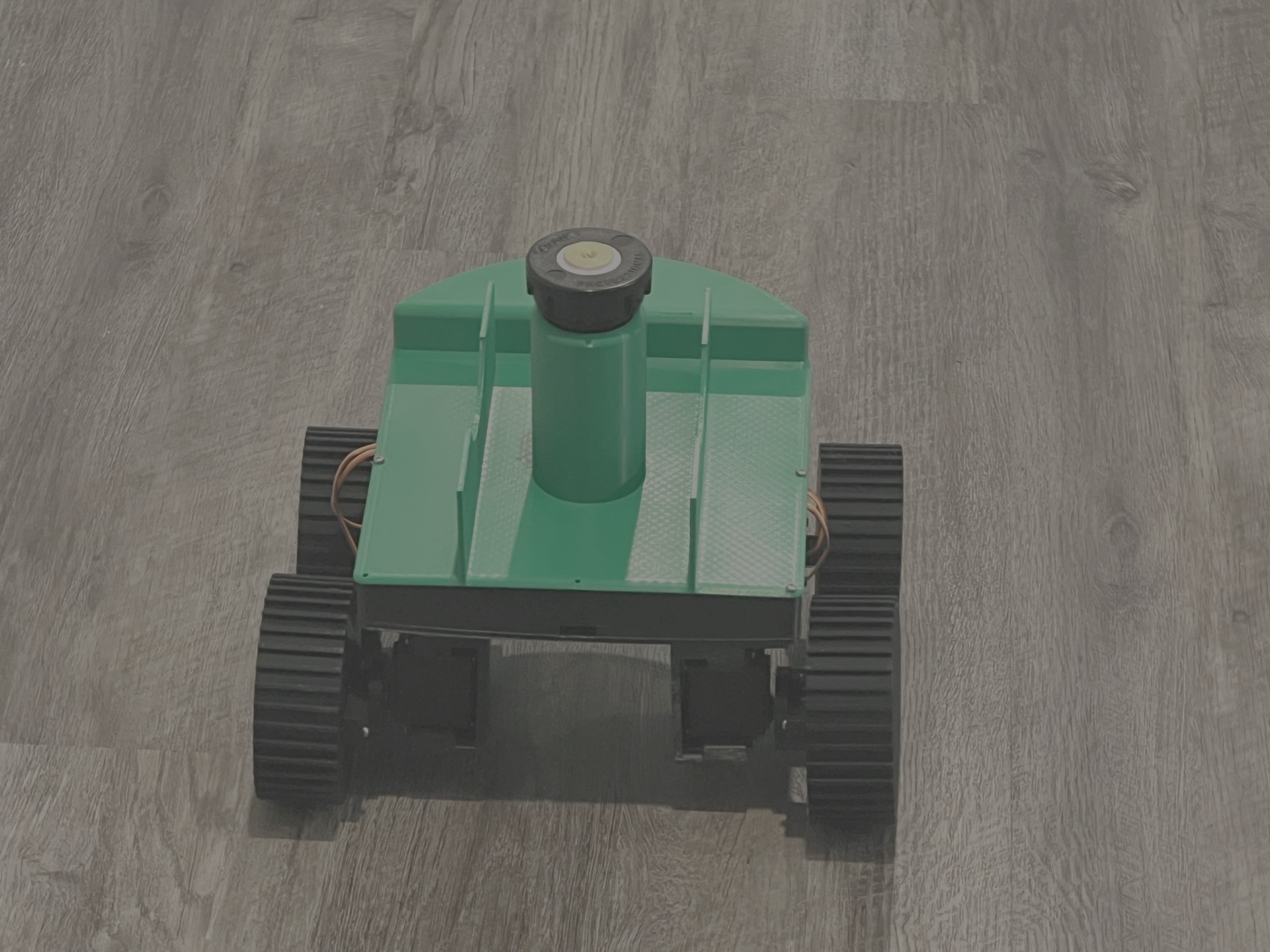
A garden patrol rover. Four gear-motor wheels drive it around the beds, a Raspberry Pi 5 runs stereo vision through a Luxonis OAK-D Lite on a pan/tilt gimbal, and GPS plus an IMU tell it where it is. The same gimbal carries a spray nozzle, so it waters exactly where the camera is aimed. An ESP32-C6 handles the real-time motor and servo control.
Real components on a coherent power system
Every part is modeled from genuine vendor CAD — the Pi 5, the OAK-D Lite (Luxonis's own STEP), the DRV8833 drivers (Pololu's) — or built to datasheet where no CAD exists. The power is a proper four-rail design off a single 4S 18650 pack: the concept's original wiring would have put 14.8 V straight onto motor drivers rated for 10.8 V, so the drivers now run from a bucked 9 V rail, the Pi from an 8 A 5 V regulator, the servos from 6 V, and the sprinkler from 12 V.
A drive train that actually mates
There's no 65 mm wheel bored for the gear motor's 4 mm D-shaft, so the pack includes a printed hub adapter that bridges the two — a small part that's easy to overlook and the difference between a rover that rolls and one that doesn't.
What's in the pack
Print-ready STL for all 20 printed parts (chassis, two-level deck, gimbal, wheel adapters), editable STEP for each, a wired BOM, a full wiring guide covering the four power rails, six renders, and a self-contained interactive 3D viewer.