
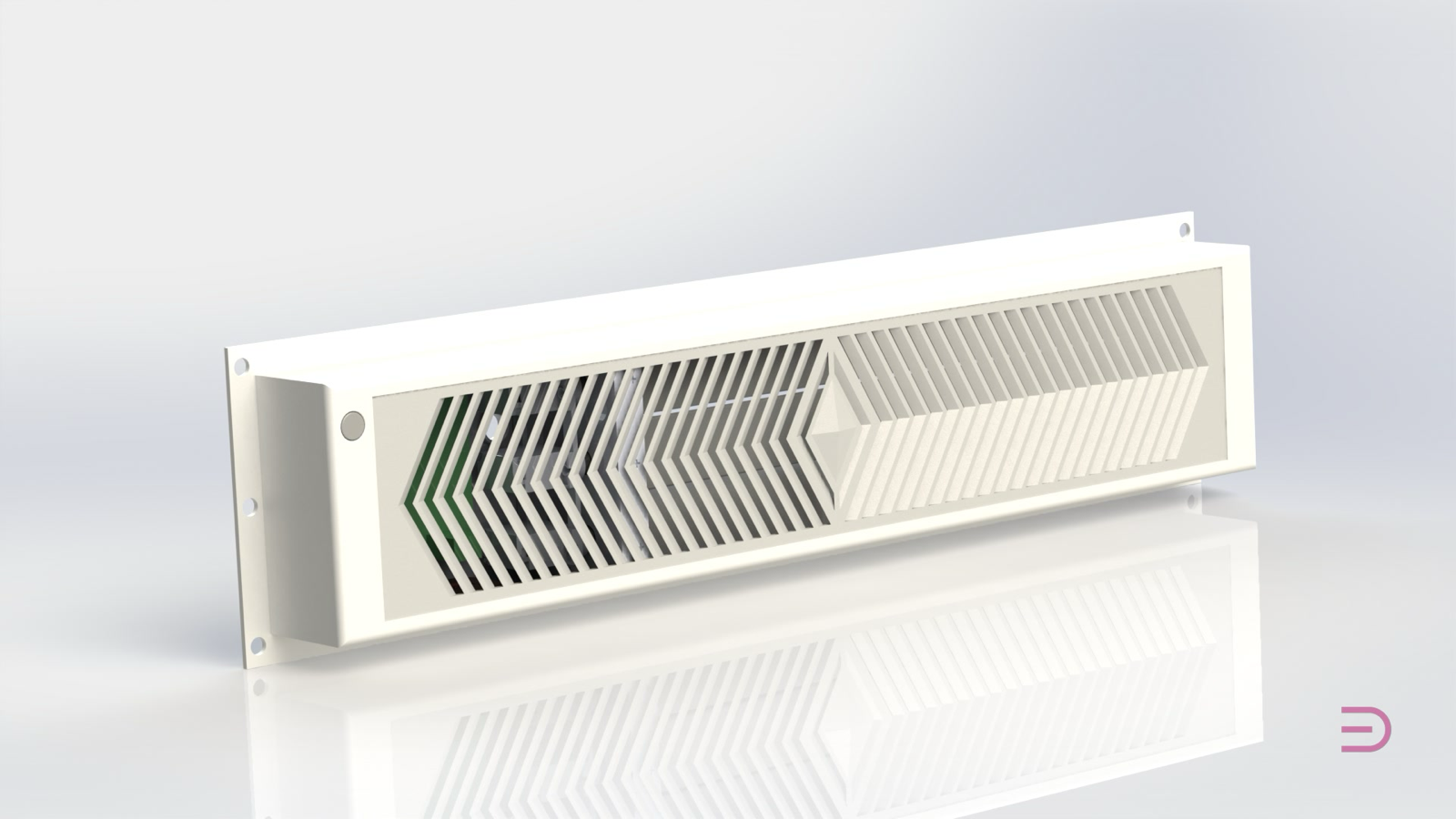
ReAirVent was an early byitl product — a Wi-Fi-controlled ceiling vent designed to fix the universal problem of "that one room that's always too hot or too cold." Instead of bolting a smart sensor onto an existing HVAC system, the idea was to give the vents themselves a brain.
The build
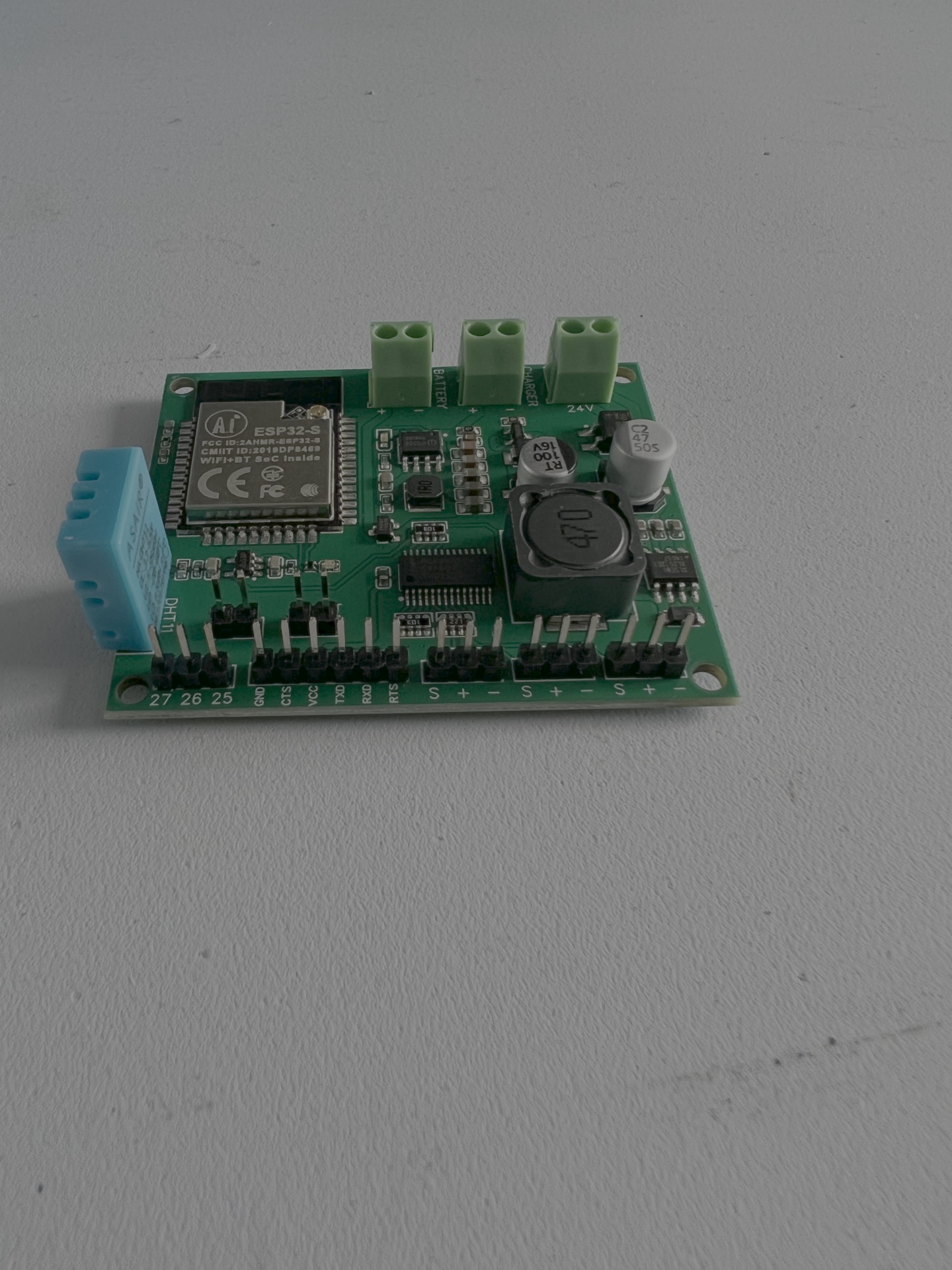
Three blades, each driven independently by an MG996R servo through a small gear stage. That meant we could rotate them in unison to choke airflow off entirely, or angle each one separately to redirect the air across a room. A custom PCB handled servo control, Wi-Fi, and sensing — temperature and humidity on-board, with the intent to coordinate setpoints across a whole-home mesh.
The power story was the part we were most proud of. An 18650 Li-ion cell sat in the enclosure, fed by a Qi wireless receiver glued behind the grille. The vent could recharge on the ceiling — no ladder, no dropping the unit — by parking a Qi pad above the drywall. For installations that wanted reliability over magic, a 24 VAC hardwire path was the fallback.
What we learned
The mechanism worked. The Qi power-through-drywall trick worked. What didn't pencil out was the rest of the path to market: certifications for an in-ceiling battery-powered device, retrofit labor cost vs. a $20 manual damper, and a 2022 smart-home market that was already crowded with cheaper sensor-only solutions.
We shelved it.
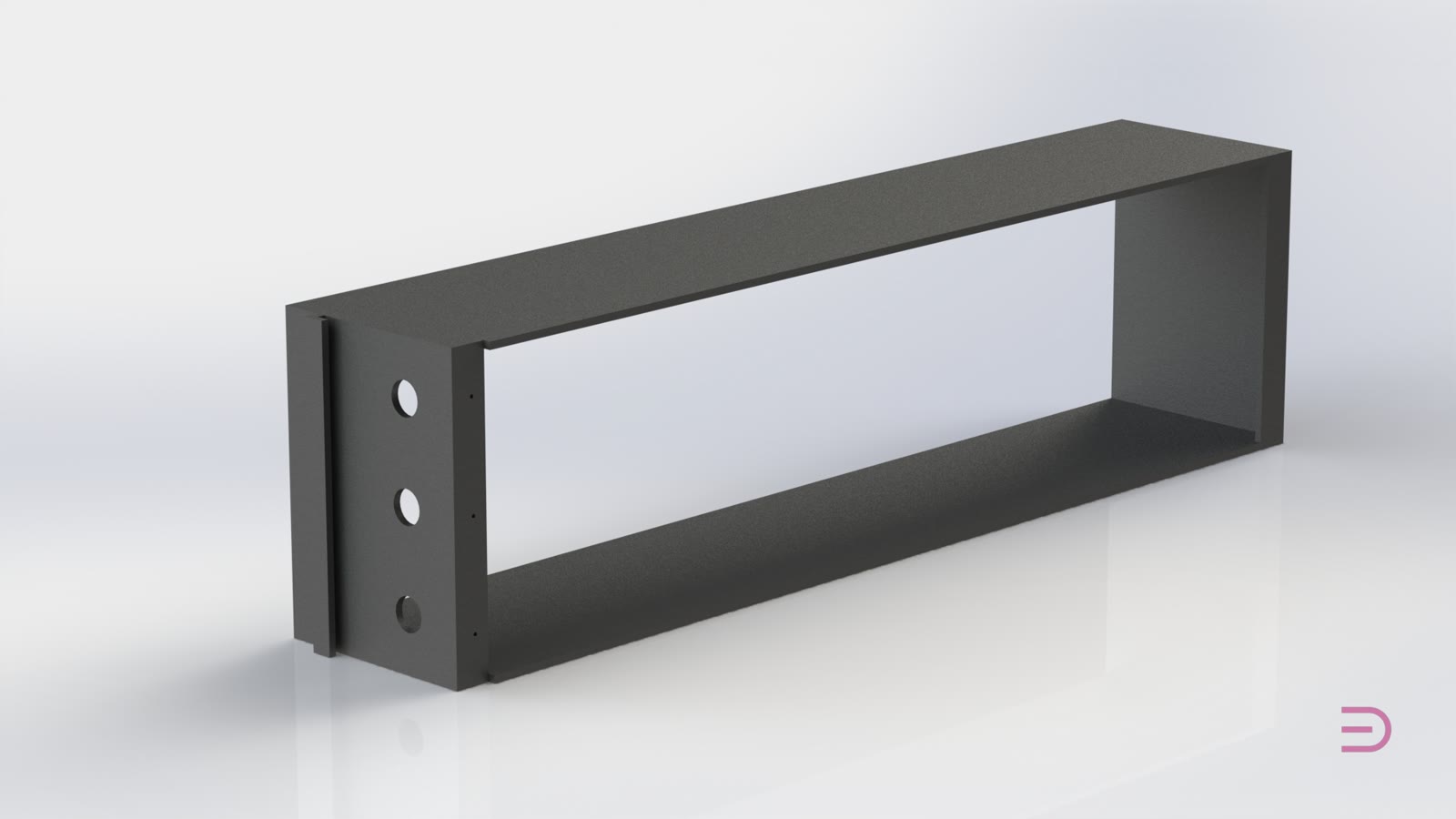
The interesting residue, though, was the enclosure work itself. ReAirVent was several months of iterating a custom PCB into a printable, serviceable, manufacturable case — and that turned out to be the part other hardware founders kept asking us for help with. It's why byitl today is a PCB-to-enclosure service: take the boards you've already designed, and ship them in cases that look intentional. ReAirVent is what taught us that was the actual product.