
← All samples

Smart Home

·

2026-07-22

·

Original byitl build

Smart Plant Pot 2026

USB-C self-watering soil pot. A capacitive moisture probe and ambient-light sensor sit at the plant; an ESP32-S3 in a separate desk-side enclosure with a 1.02 L lift-out reservoir doses water through a 5 V peristaltic pump when the soil reads dry. USB-C in, 5 V throughout — no battery, no BMS, no buck.

Heads up: samples are here to be fun and spark ideas. They may be incomplete or unverified — use as a starting point, not a finished product.
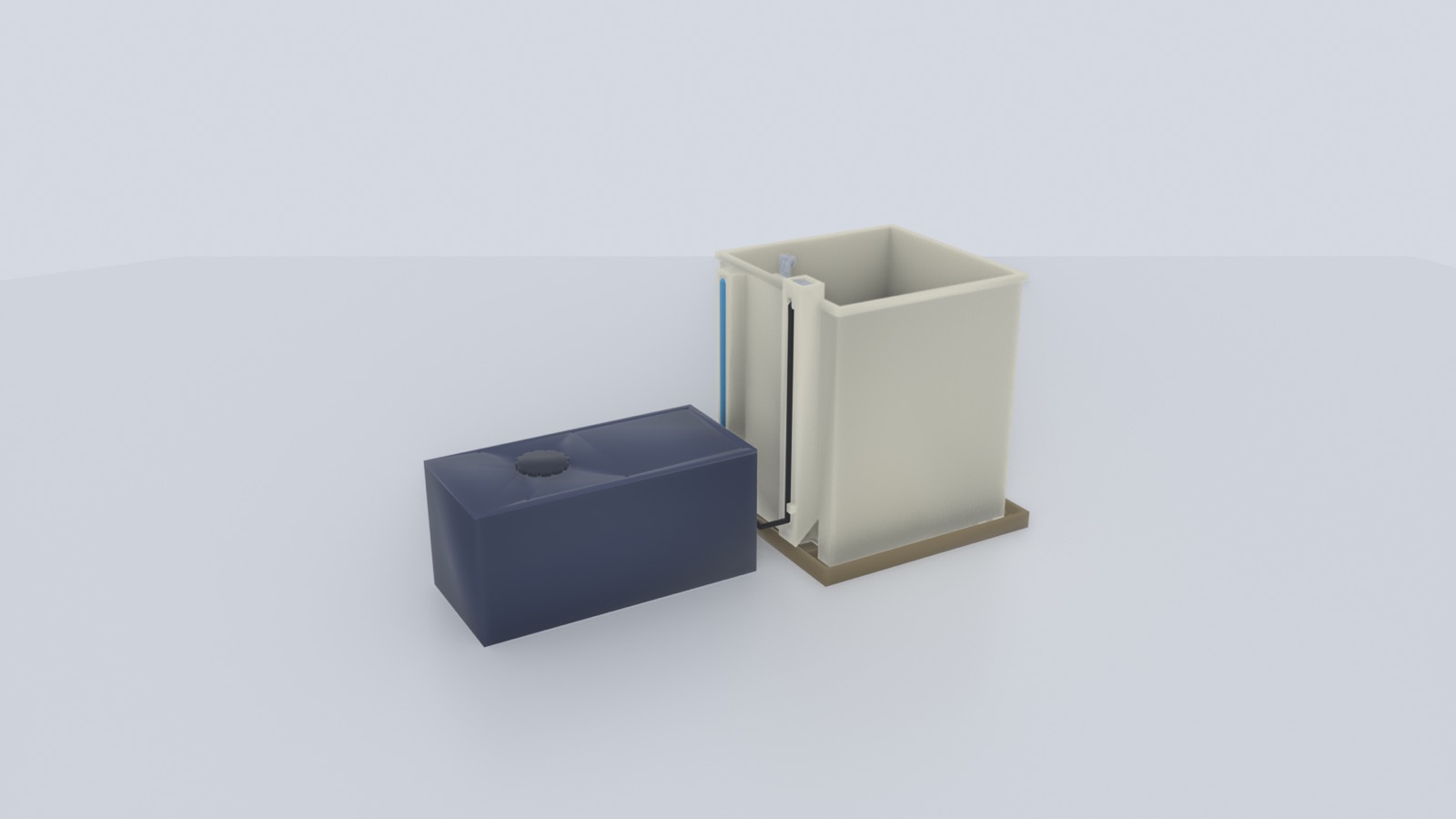
Smart Plant Pot 2026 — 3D printed PCB enclosure design, hero render
Interactive

Built for real

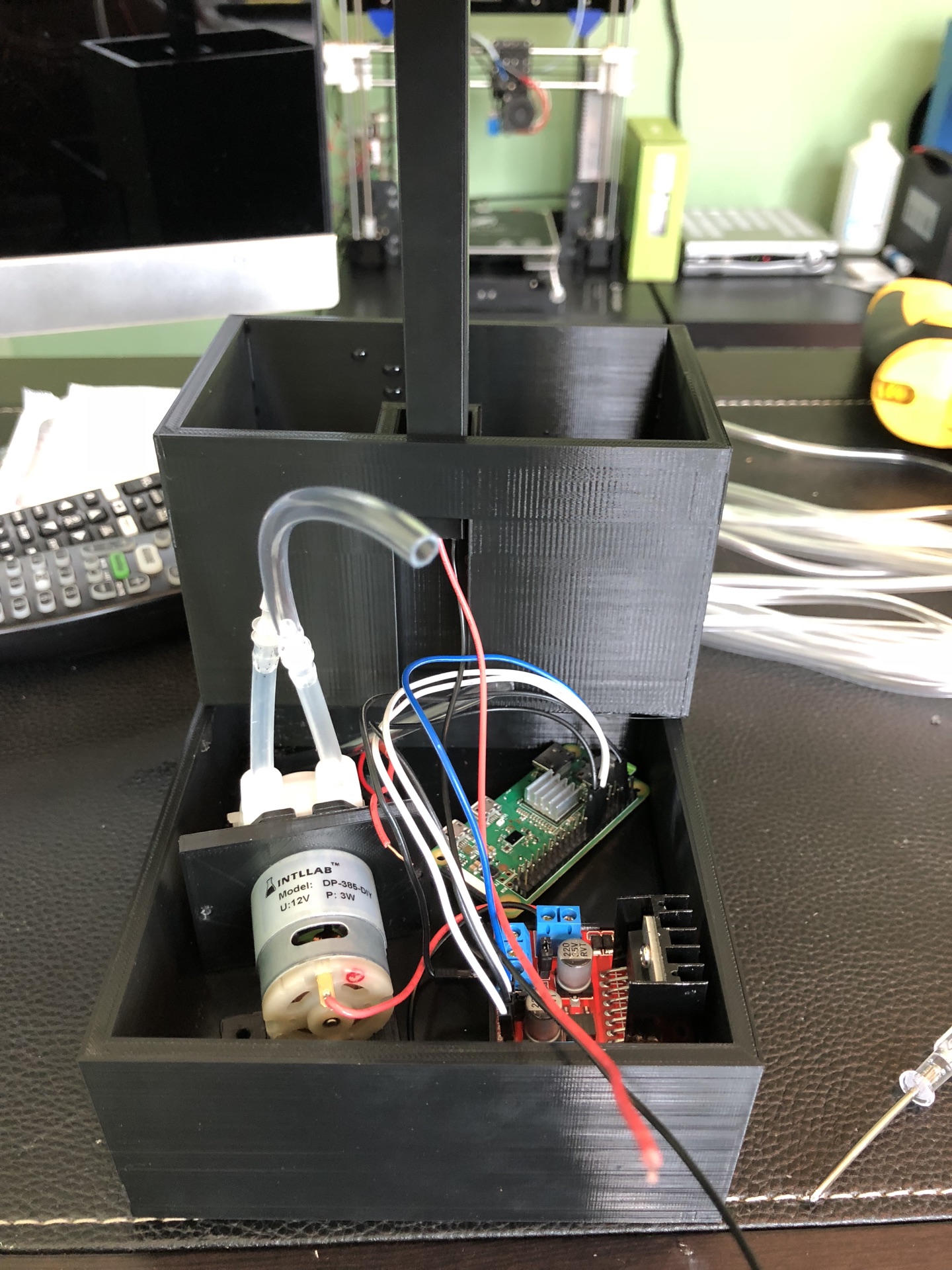
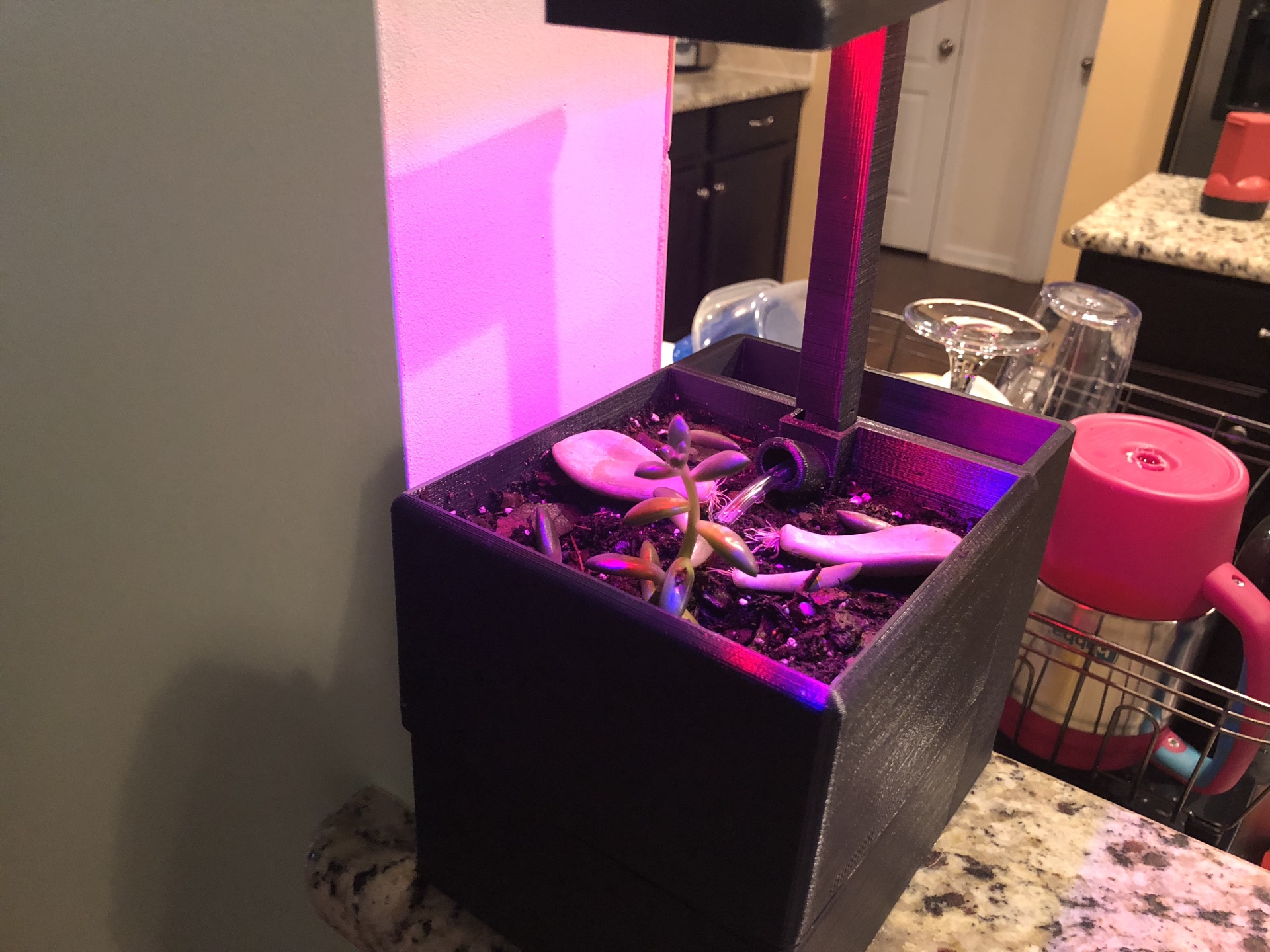
Photos and video from the actual prototype during development — not the render.

An earlier physical prototype of this concept — a single-unit build with a Raspberry Pi Zero, a 12 V pump and a motor driver on a printed shelf. The pack above is a cleaner ESP32-S3 redesign that moves the electronics to a separate desk-side enclosure; these photos are the predecessor, not this pack's build.
That earlier prototype assembled and running on a kitchen counter, with the integrated grow light it used to carry. The current design drops the grow light and splits the unit in two.
Walkthrough of the earlier prototype build.

Gallery

A USB-C powered self-watering soil pot for one plant, in two parts: a clean square soil pot with a real drainage floor and matching saucer, and a separate desk-side enclosure holding the brain, a 1.02 L lift-out reservoir, and the pump. One wall adapter runs the whole product.

Two housings, wet and dry kept apart

The desk enclosure is split by a full-height sealed divider into a wet bay (the lift-out reservoir + pump) and a dry bay (the Feather ESP32-S3 + MOSFET driver). The reservoir is a separate lift-out vessel — the wet bay is a spill-catch, not the tank — and the wet→dry divider is breached only by a single tube pass-through near the top of the wall, so a wet-side overflow pools ~90 mm deep before it could ever reach the electronics.

Real components, real geometry

Every electronic part is modeled from verified vendor CAD — the Feather ESP32-S3, the 4026 STEMMA soil sensor and the MOSFET driver are Adafruit's own STEP files. Boards seat on printed standoffs with pilot bores for heat-set inserts; the USB-C port reaches the outside wall; cable exits carry printed zip-tie posts so a yanked desk cable can't pull on a JST.

What's in the pack

Print-ready STL for all 7 printed parts, editable STEP for each, a wired BOM with real Amazon-sourceable parts, PETG print settings + leak-test steps for the reservoir, full assembly and wiring guides, twelve renders (six studio + six inspection close-ups), and a self-contained interactive 3D viewer.