
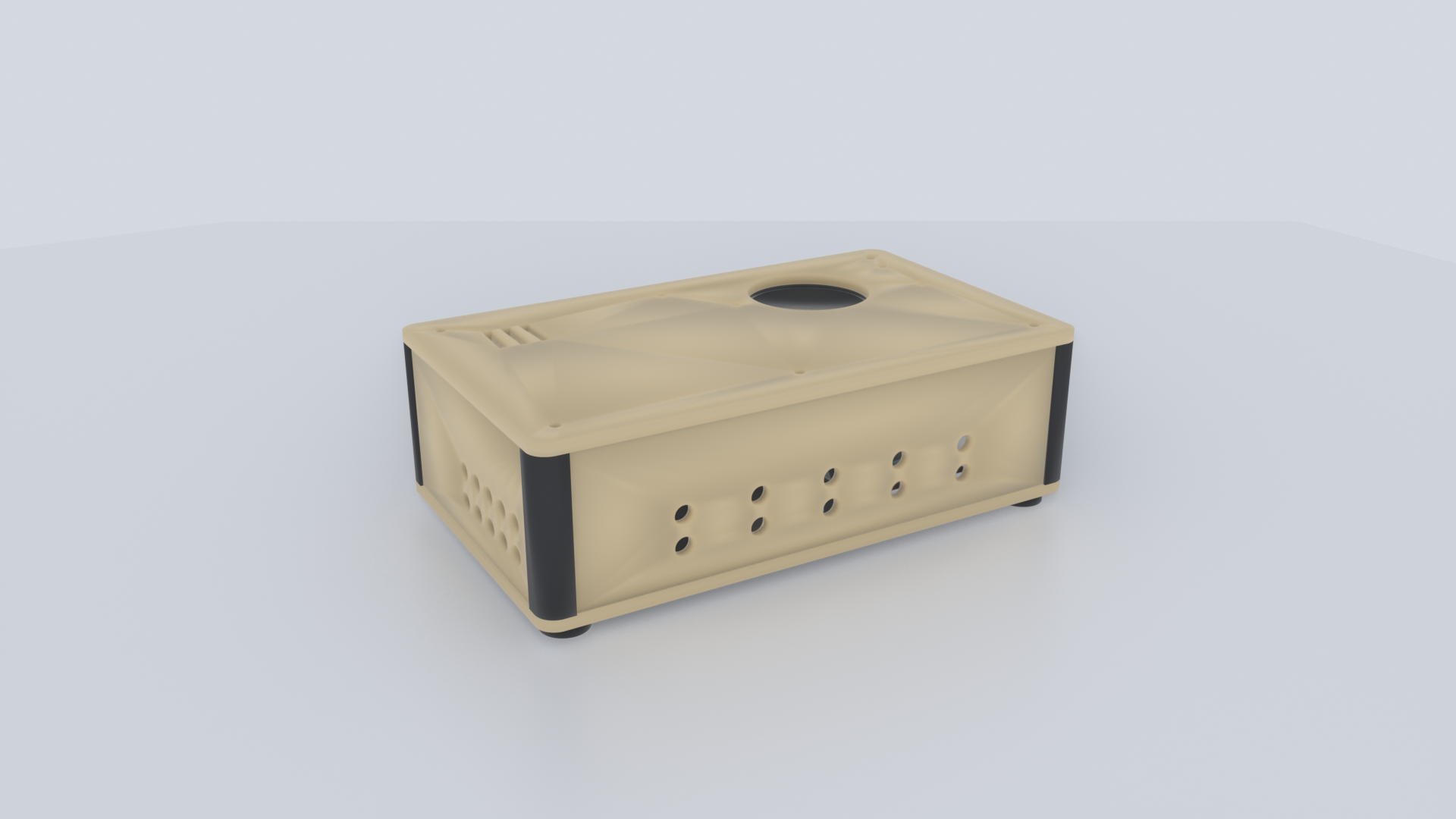
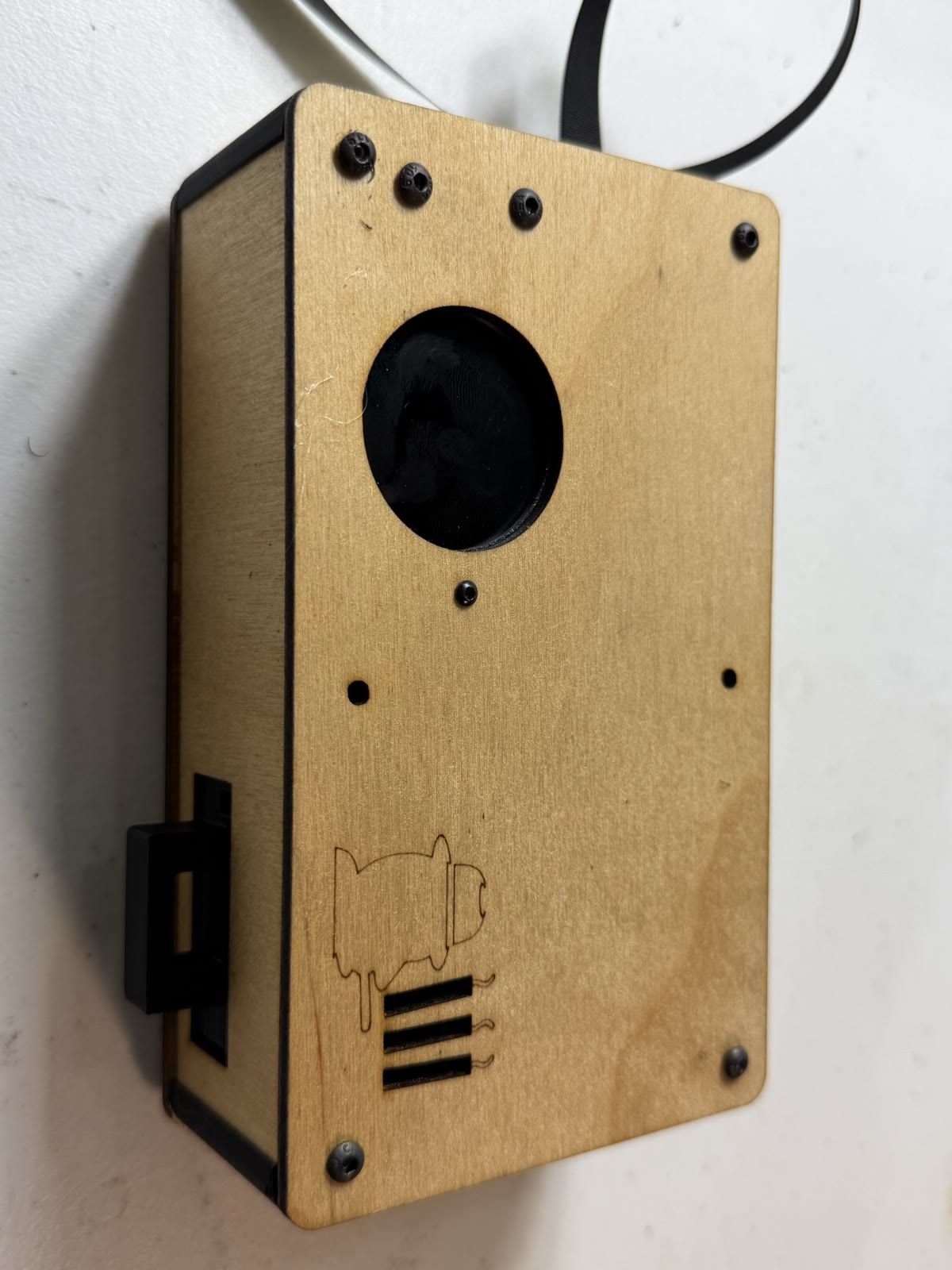
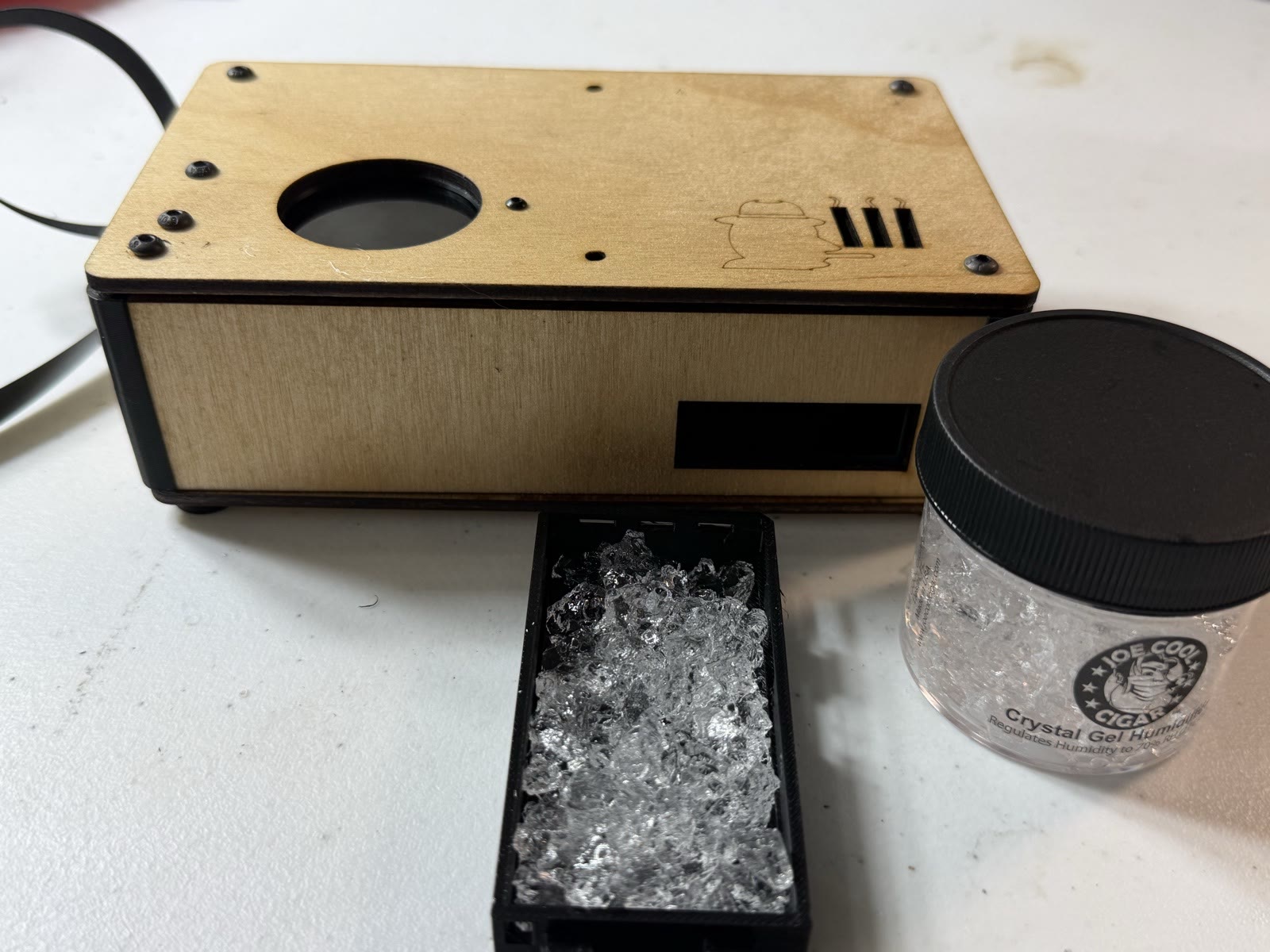
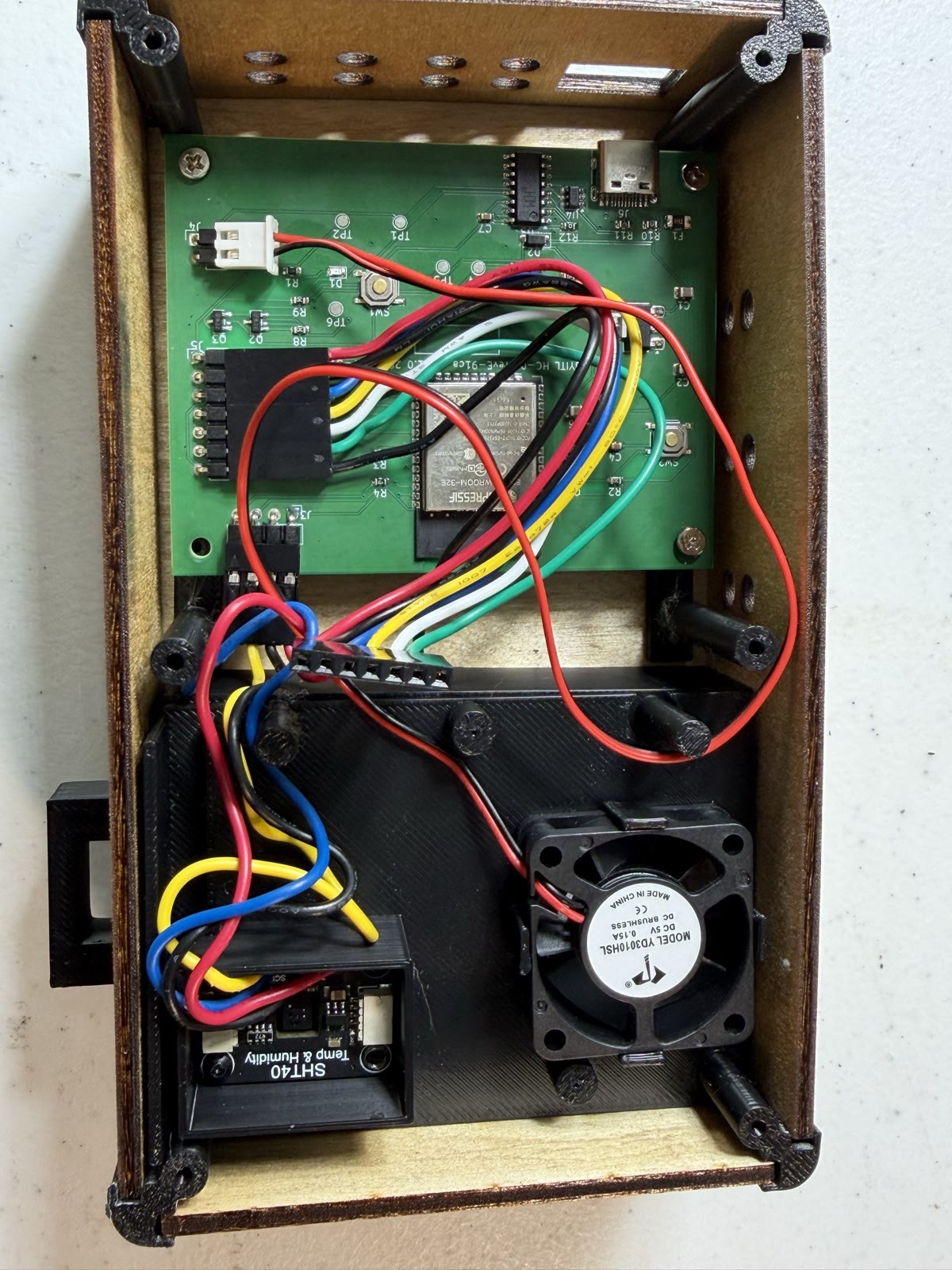
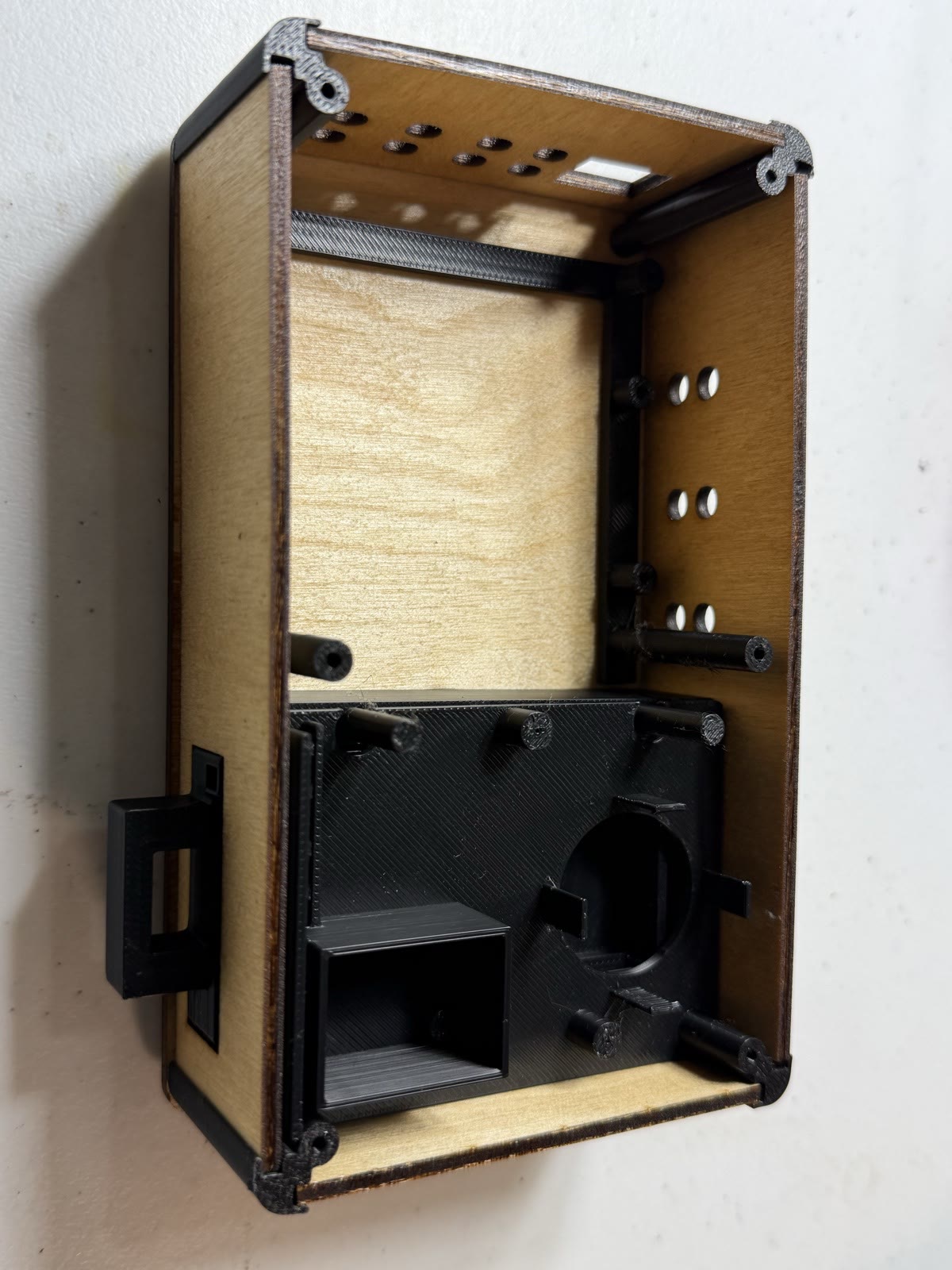
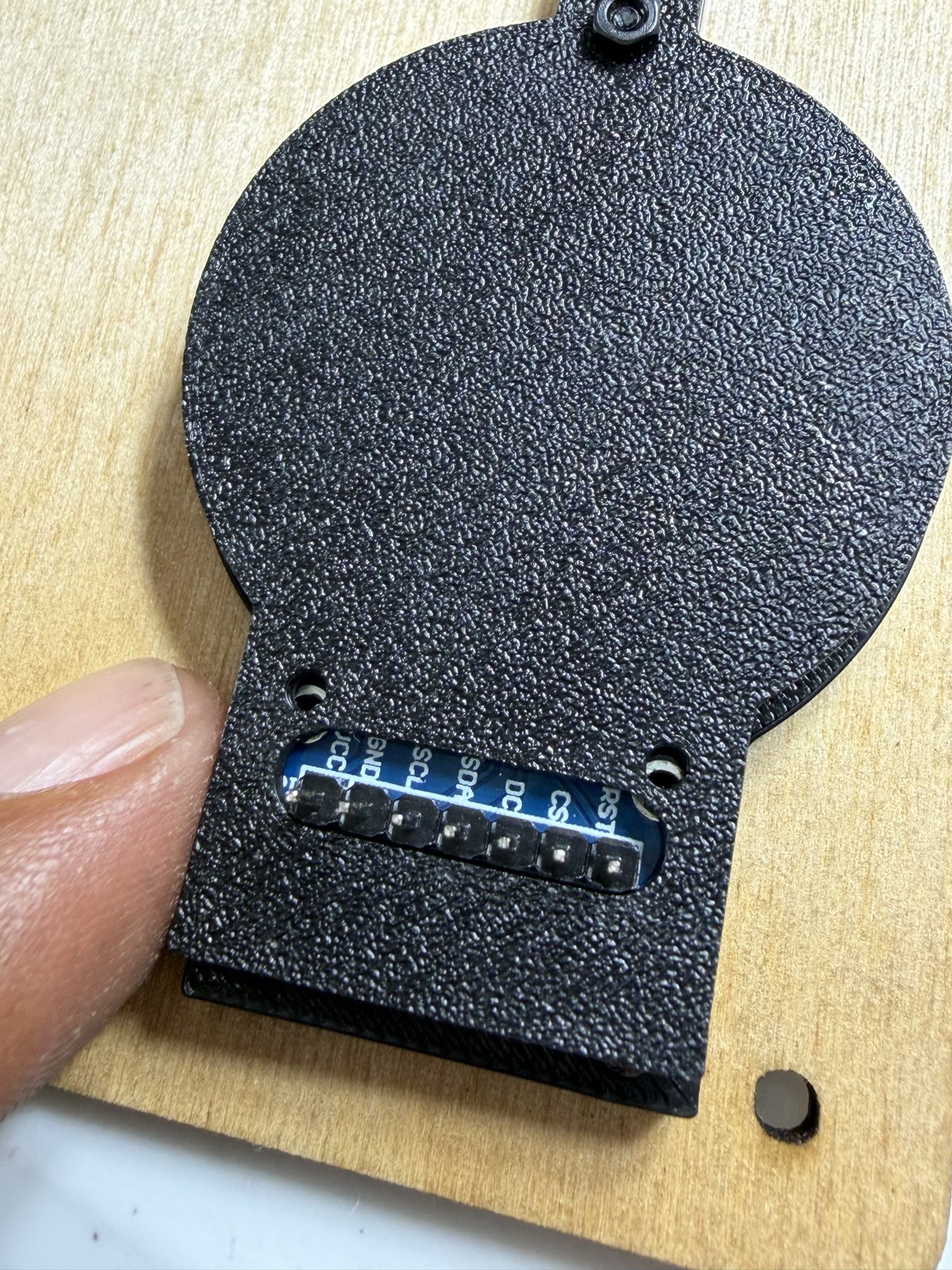
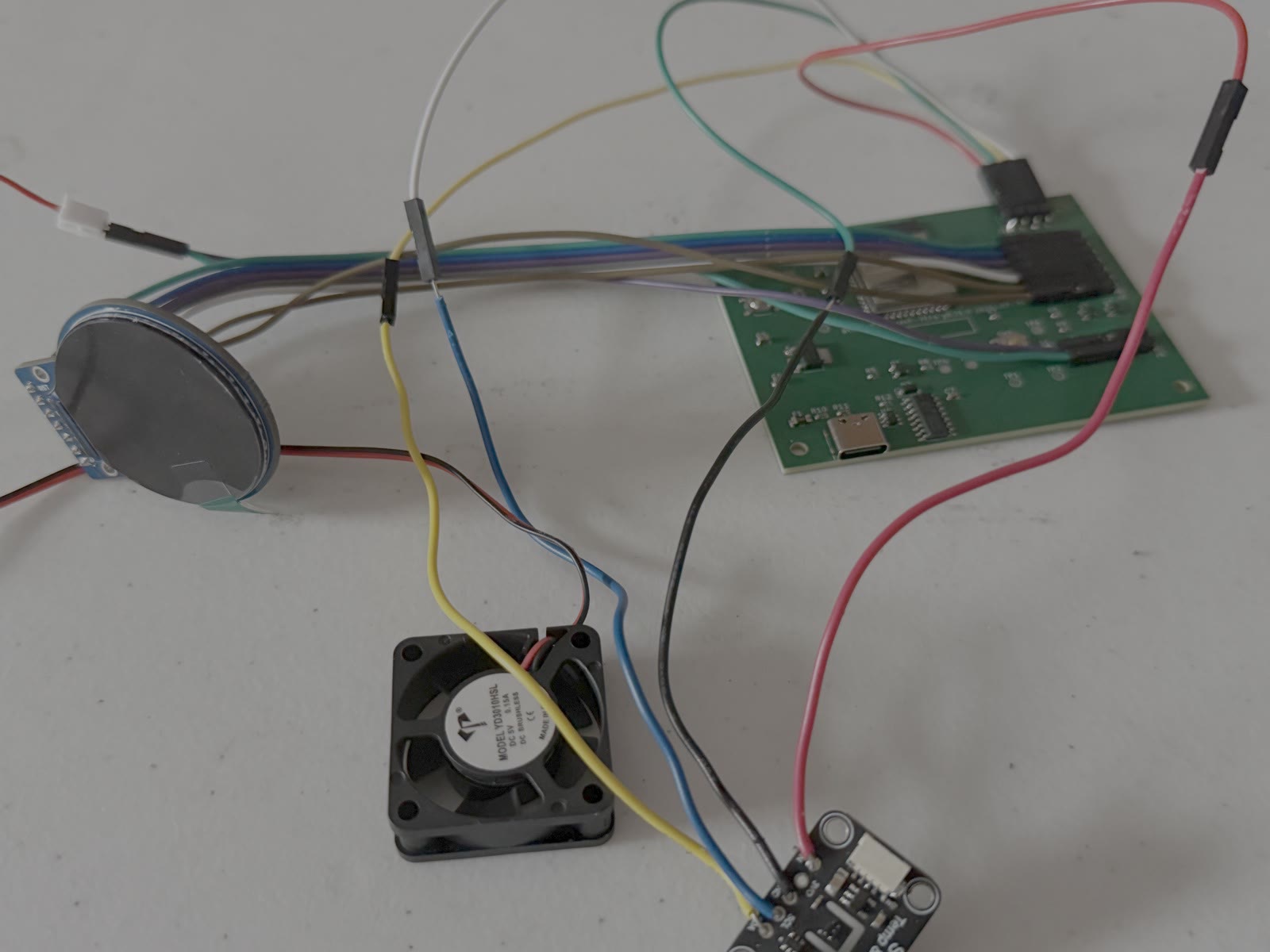
A controller that sits in a desktop cigar humidor and holds its humidity. An SHT40 sensor reads the air, a 1.28 in round display shows humidity, temperature and the setpoint, and when the humidor runs dry a 30 mm fan pushes air across a drawer of humidity gel beads. Setup is over Wi-Fi from a phone.
This is the one byitl build that went through the whole pipeline at once: case, circuit board and firmware, designed by our agents, checked by our review gates, and then built and wired by hand.
A custom board, not a dev kit
The circuit board is our own: an ESP32-WROOM-32E module, one USB-C port for both power and programming through a CH340C, and a MOSFET to switch the fan. This is rev E. Rev D boards came back with connectors that read open. We traced it to a bug in our own design tooling, which had stripped the bottom pads off every through-hole part, fixed the tool, and re-spun the board. We wrote that up in the annular rings we never chose and the annular ring fix held. The path from jumper wires to the custom board is in this post.
Wood outside, sealed plastic inside
Six laser-cut 1/8 in Baltic birch panels are captured by four printed corner posts, with no glue joints in the shell. The panel slots were sized from calipered sheets (2.85 to 3.00 mm, not the nominal 3.175), because the plywood sold as 1/8 in is really metric 3 mm. Everything wet lives in one sealed printed pan with an epoxy-lined basin, and the electronics stay dry above it. A curb walls the bead drawer off from the sensor, so the SHT40 samples the humidor's air rather than the air right over the beads. The engraved smoke plume on the lid is the sensor's air intake.
What's in the pack
Print-ready STL for all 15 printed parts, already in their print poses. Laser cut and engrave files (SVG and DXF) for the six birch panels. Editable STEP for every part, a 44-line BOM, an illustrated assembly guide, print cards, the QA report, renders, and an interactive 3D viewer. The circuit board fab files and firmware are not included.