
Electronics product development From breadboard to a device you can hand someone.
Custom PCB, ESP32 firmware and enclosure, designed together, plus one working unit. From $7,500, 4–6 weeks. Starting from just an idea is fine.
Complexity score
Does your device fit? 8 questions, one tap each.
The same rubric we use to scope a build. It runs in your browser and nothing is sent until you choose to send it as your brief. Or see what prototypes cost elsewhere.
The gap
Your idea needs three specialists. Usually that’s three vendors.
Usually
- Electrical engineer
- Firmware developer
- Case designer
Each hands off files to the next, and the mismatches show up at assembly:
- a USB-C port that doesn’t line up
- a pin wired to the wrong function
- a board that doesn’t fit its standoffs
The firms that do all three run multi-month programs with a five-figure minimum.
With us
HC-01 review · rev E
- board: unconnected nets0
- board held by its 4 cradle screwsPASS
- board_pins.h made from the boardPASS
We check the three against each other by machine before anything is built.
Lines from HC-01’s own review reports.
What you get
Files and a device.
Custom circuit board
KiCad schematic and layout, checked against the fab's design rules before ordering. Fab-ready Gerbers, BOM and pick-and-place files.
board_pins.h · generated
#define BYITL_BOARD_REV "E"
#define PIN_I2C0_SDA 21
#define PIN_I2C0_SCL 22
#define PIN_SIGNAL_FAN 25
Firmware
ESP-IDF source for the ESP32 family, flashed over a single USB-C cable. Pin definitions are generated from the board design, not typed by hand.
Enclosure
Designed around the real board model. Print-ready STL, editable STEP, laser cut files where the design uses them, renders, and an illustrated assembly guide.
One functional prototype
Not a high-fidelity one: assembled, flashed and tested by us, then shipped to you. It proves the device works. The case is 3D printed or laser cut in one colour, with no retail finish (plating, colour matching or packaging), and it may be larger than the final product.
review · HC-01
- boardPASS
- enclosurePASS
- firmwarePASS
The review reports
Every board, enclosure and firmware build passes an automated review before it reaches you. You get the reports.
How it works
Five steps, 4–6 weeks.
- 15 min
01
Scoping call
Fifteen minutes on what the device has to do. You get a written quote back: scope, price and timeline.
02
Design and approval
Schematic, board layout and enclosure renders. You approve them before anything is ordered.
03
Fab
Boards are made and assembled by our fab partner while the enclosure is printed and cut.
04
Bring-up
We flash the firmware, test the board, and fit it into the enclosure.
05
Handoff
One functional prototype shipped to you, with every file needed to build more.
HC-01 humidor controller · our own build
Five boards arrived. All five were defective. Here’s what happened next.
1 · Fail
The rev D batch. Three dead on the USB-C power path, two with an open display header. Found on the bench with a meter, not by a customer.
2 · Fix
Respin, rev E, built by PCBWay. Five for five on the first attempt. Here it is in the birch case, with the fan and the sealed wet pan below.
3 · In service
Running in a real humidor. Twenty hours in a real humidor. It doesn’t match the humidor’s own gauge yet, and it can add humidity but not remove it. The build log says what rev F changes.
Every build gets the same treatment: tested before it’s called done. The whole build, written up:
Samples
More from the pipeline. Most free to download.
Other devices we've designed, and the ones we've built. STL, BOM, renders, most free to download.
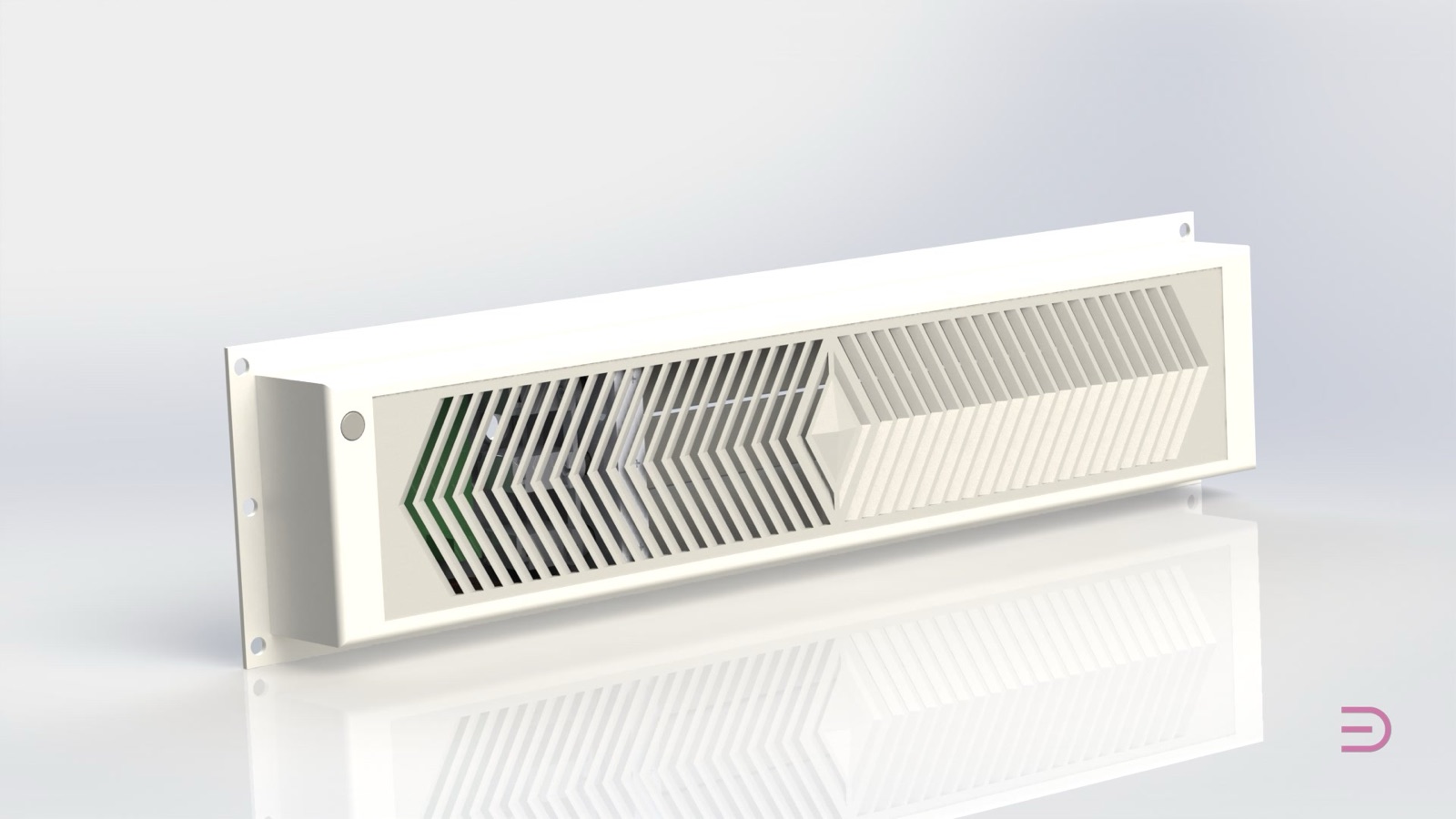
Smart Home
ReAir Smart Vent
A 2022 prototype: a Wi-Fi-controlled ceiling vent with three independently-driven blades, Qi wireless charging, and an 18650 battery.
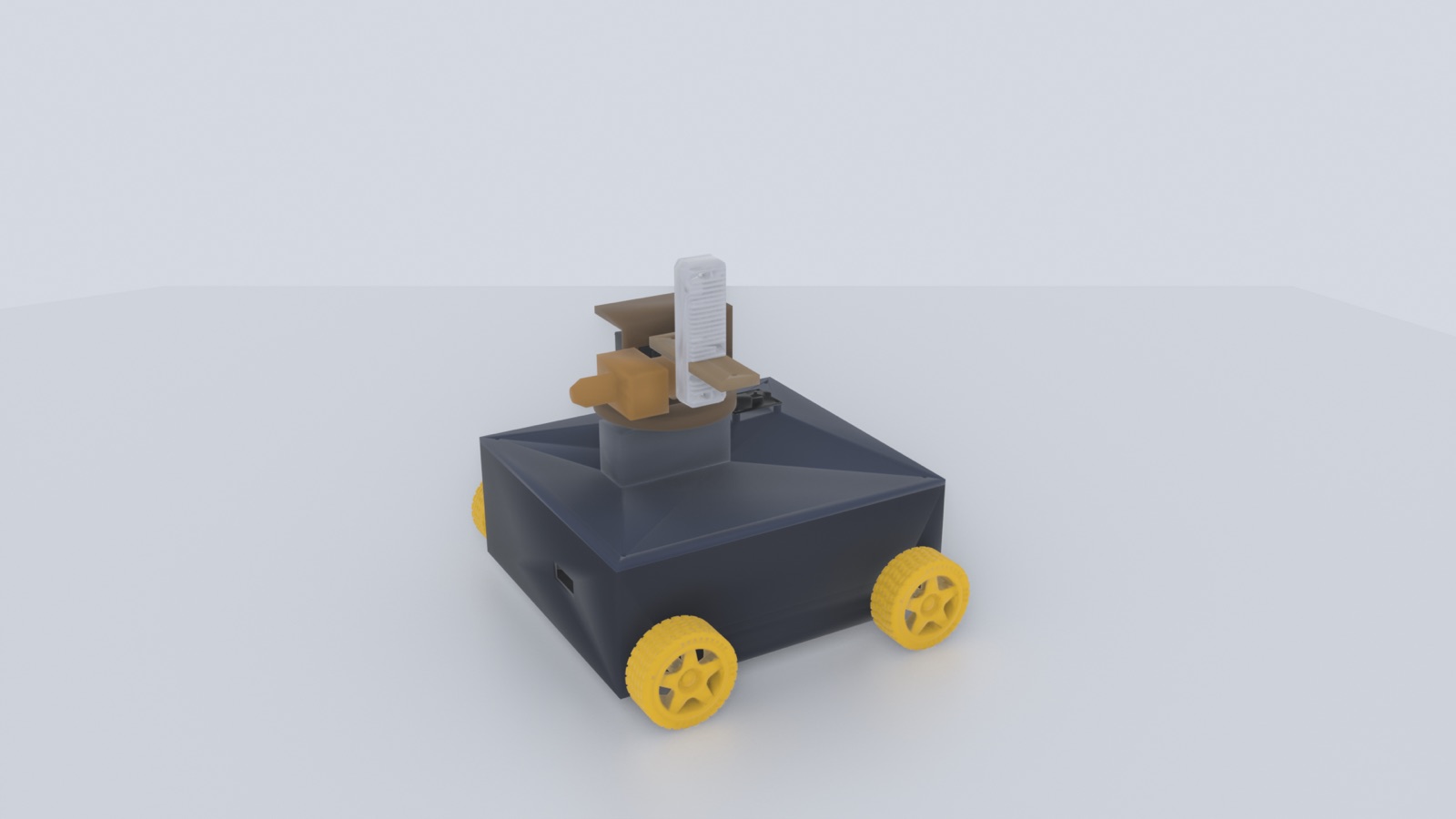
Autonomous Robot
Everyspot Garden Rover
A 4-wheel-drive garden patrol rover that finds its way with stereo vision, GPS and an IMU, and waters wherever its camera is aimed. A Raspberry Pi 5 runs an OAK-D Lite depth camera on a pan/tilt gimbal that also carries a solenoid sprinkler. Runs off a 4S 18650 pack on a coherent four-rail power system.
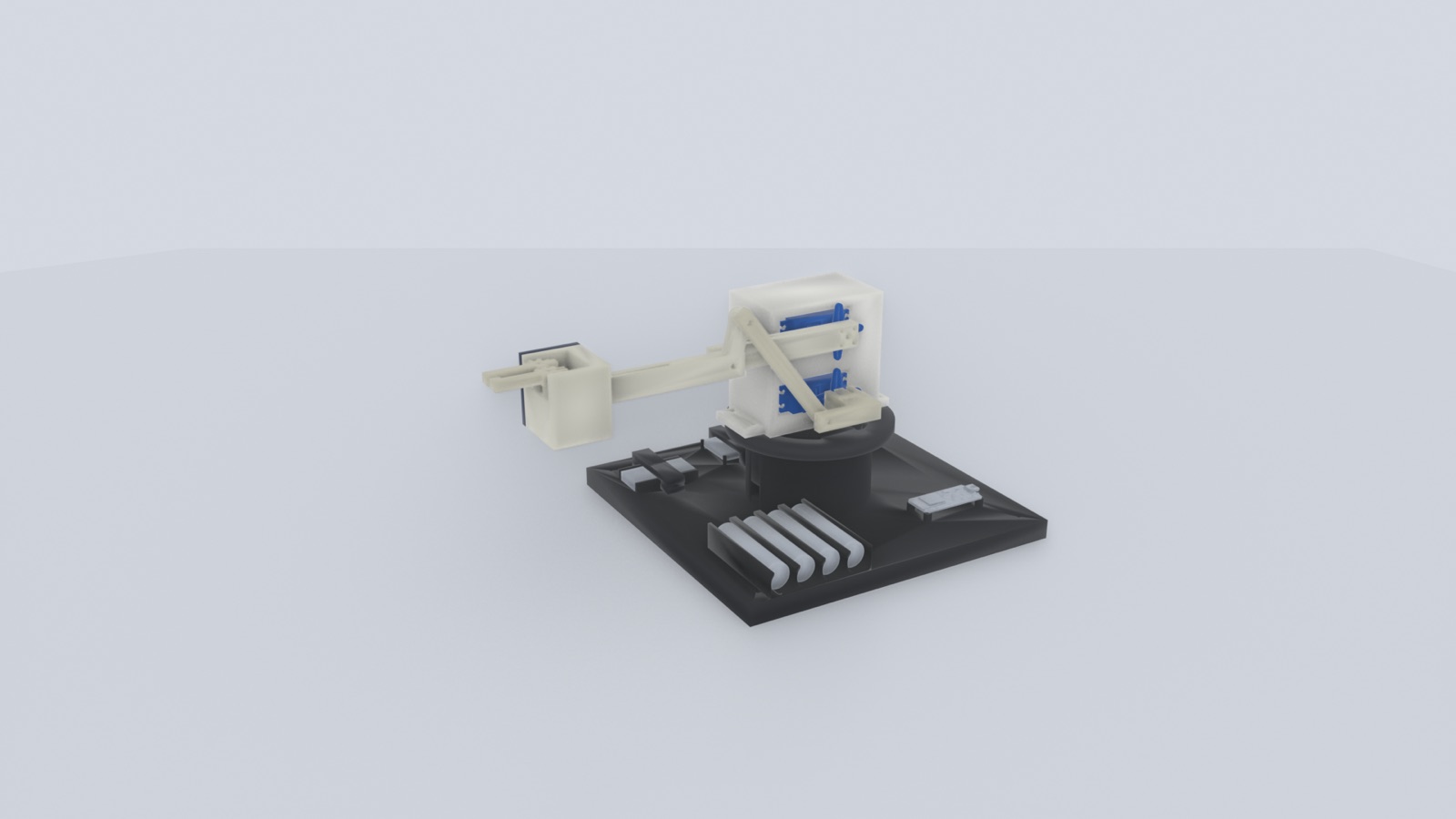
Robot
4-DOF Desktop Robot Arm
A 4-DOF desktop pick-and-place arm on the EEZYbotARM Mk2 four-bar topology — yaw, shoulder, elbow and a geared gripper. ESP32-S3 + PCA9685 driving three MG996R servos and an SG90 gripper, on a 4S 18650 pack. Board-level parts from vendor CAD; servos and power parts built from datasheets.
Pricing
One engagement, quoted to your device.
Full prototype
Custom circuit board, firmware and enclosure, plus one assembled, working unit. The final price is set after the scoping call: a simple sensor device sits near $7,500; more boards, more parts or harder assembly cost more.
Paid 40% at kickoff, 30% when you approve the design, and 30% at handoff, each through a payment link we email you. You approve the design before anything is ordered, and you can stop after any milestone with nothing further owed. Paid milestones aren't refunded.
Not sure where your device lands? Score it or see what prototypes cost elsewhere.
Who this isn't for
Enclosure-only work
If you already have a finished board and only need a case, we’re not the right shop any more. We design the whole device.
Budgets under $7,500
A custom board, firmware and enclosure with a working unit is real engineering. Below that, a dev kit and an off-the-shelf case will serve you better.
Production and certification
Injection-mold tooling and volume manufacturing are separate engagements, and FCC certification is done by a test lab. We build the prototype that gets you there.
Questions
Asked & answered.
Can you manufacture my product?
We build the first working unit, not the production run. You get the device plus every file a factory needs: the board fab files (Gerbers, BOM and pick-and-place), the firmware source and the enclosure CAD. You own them, so you can take them to any manufacturer. A small batch of extra units is quoted separately, and redesigning the enclosure for injection molding is a separate engagement.
I only have an idea. Is that enough to start?
Yes. A clear description of what the device should do is enough. A sketch, a photo of something similar, a breadboard or dev-kit prototype, a schematic, or an existing board all help, but none is required. We work out the rest on the scoping call.
I'm not an engineer. Can I still work with you?
Yes. Tell us what the device should do, who will use it and roughly how big it should be. We turn that into the circuit board, firmware and enclosure, and you approve the design from renders before anything is ordered.
Can you build something small, like a keychain or a wearable?
Yes, if it can run on an ESP32-class chip: small battery-powered devices with a few buttons, lights, sound or a sensor. Under about 40 mm it gets harder (a smaller battery and a tighter board), so the complexity score counts very small devices as a step up in the price. The first prototype of a very small device is usually somewhat larger than the final product, and it is functional rather than finished: it works, but it won't have the final look.
Will you sign an NDA?
Yes. Send yours and we'll sign it before you share anything, or use our short mutual NDA, which we can email on request. Either way your files stay confidential and aren't shared, posted, or used as portfolio without your written sign-off.
Can you design the circuit board, not just the case?
Yes. That's the core of the work. We do the schematic and layout in KiCad and check the board against the fab's design rules before ordering. You get the fab files (Gerbers, BOM and pick-and-place), and the enclosure is then designed around the real board model, so ports, standoffs and clearances line up.
Do you write the firmware?
Yes, for the ESP32 family: sensor reading, displays, controls and Wi-Fi. The board's pin definitions are generated from the board design itself, not typed by hand. Heavier, Linux-class compute is quoted case by case.
How long does it take?
4–6 weeks from kickoff to a working unit. You approve the schematic, board layout and enclosure renders before anything goes to fab. Board fabrication and assembly take about a week or two in the middle; those lead times are the fab's, so we estimate them rather than promise them.
What does it cost?
From $7,500. The final price is set after the scoping call, because it depends on how many boards, parts and enclosure pieces the device needs and how hard it is to assemble. It's paid 40% at kickoff, 30% when you approve the design, and 30% at handoff. The hardware for your working unit is included in the quote.
What if I want to stop partway?
You can stop after any milestone and owe nothing further. Paid milestones aren't refunded, because the design time and hardware behind them are already spent. That's also why you approve the design before anything is ordered.
Do I get a working unit?
Yes: one assembled, flashed and tested unit, shipped to you, along with every file needed to build more. More units, or a small batch, are quoted separately.
Will it look like the finished product?
No. It's a functional prototype, not a high-fidelity one. It does what the device is meant to do, so you can test it, demo how it works and hand the files to a manufacturer. The case is 3D printed or laser cut in one colour. It won't have a retail finish (plating, colour matching, a final surface texture or packaging), and it may be larger than the final product.
Who owns the design?
You do. Once the engagement is paid, the design IP is yours: board files, firmware source and enclosure CAD. We don't keep rights to it or show it publicly without your permission.
Is it ready for production?
It's a working prototype, built to prove the product and to show investors, testers and manufacturers. Redesigning the enclosure for injection molding is a separate engagement we quote case by case. FCC certification is done by a test lab, and we can prepare the prototype for it.
I only need an enclosure for my existing board. Can you do that?
Not any more. We now design the whole device (board, firmware and enclosure together) and no longer take enclosure-only work.
You’ll talk to me, not a sales team.
Jerome Privott, founder, Charlotte NC. Reply within one business day.
Book a 15-min call