
Who can build my electronic gadget idea?
Jerome Privott · · 7 min read
The short answer
Four kinds of builders make electronic gadgets for other people: a factory, freelancers, a product design firm, and a small studio that designs the whole device. A factory fits when something close to your product already exists and you want your name on it. If nothing like it exists yet, you need someone to design the circuit board, the firmware (the code that runs on the chip) and the case, and then build one that works. That is what we do at byitl, from $7,500, in 4 to 6 weeks.
Which one is right for you comes down to three answers. Does a product like yours already exist? How much coordinating do you want to do yourself? What can you spend?
Which builder fits which idea?
| Builder | Fits when | What you get | What to watch |
|---|---|---|---|
| A factory | Something close already exists, and you want your logo, colours or packaging on it | Units in volume | A brand-new design needs design files before a factory can make it. Ask about the minimum order. |
| Freelancers | You're happy to manage the project and want each piece to cost less | One piece per person: board layout, firmware, or case design | You own the fit between the pieces, plus ordering parts, assembly and testing |
| A product design firm | You want research, industrial design, engineering and a production plan under one contract | A full program, often several prototypes | Wider scope means a bigger budget. Ask for their minimum engagement first. |
| A small studio like byitl | It's a new device that needs a custom board, firmware and case, and one working unit to prove it | One working unit plus every file to build more | It's a prototype, not production, and it's functional, not retail-finished |
| You, with a development kit | Your budget is under $7,500, or you want to test the idea first | A working bench version | It won't look like a product |
When is a factory the right call?
When the product already exists. If you've seen something close to your idea for sale and you want it in your colour with your logo, a manufacturer that already makes it is the shortest path. You don't need a prototype engineer for that. If you call me with that idea, I'll tell you so.
If nothing like it exists, the factory has nothing to start from. It needs the board fabrication files, the parts list, the firmware and the case CAD. Making those files, and proving they work in one real unit, is what a prototype is for.
Why not hire three freelancers?
You can, and each piece will cost less. The catch is the seams between the pieces.
A new device needs three specialists: an electrical engineer for the board, a firmware developer for the code, and a case designer for the enclosure. Hired separately, each hands files to the next, and the mismatches show up at assembly. A USB-C port doesn't line up with its hole. A pin is wired to the wrong function. The board doesn't fit the standoffs, the posts the case screws into.
When that happens, someone has to work out whose problem it is. With three freelancers, that someone is you.
What goes wrong between the pieces?
Here's our own example. Even with one team owning all three pieces, our humidor controller, the HC-01, showed exactly where the seams are.
- The sensor cable. Two of five boards failed their first sensor test. The boards were fine. Our board's connector runs power, ground, data, clock. The sensor's small carrier board labels its pins power, ground, clock, data. A straight cable crossed the two signal wires. Rewired by function, the same board read 48.4% humidity.
- The screen. The display showed everything mirrored, on every unit. The product firmware had copied three of four display settings from our bench version and left the fourth behind.
- The boards themselves. Our earlier rev D batch came back with two separate faults. One was ours, a bug in the design files. The other was on a power section our files never touched. Telling them apart took a meter and a careful write-up before anything could be fixed.
None of these was hard to fix. Each one needed a person who could see the board, the code and the case at the same time. With three vendors, each can be right about their own piece while the device still doesn't work. (The rev E write-up has the details, and the rev D story has the faults.)
When is a design firm the better choice?
When you need more than a working prototype. If your plan includes market research, an industrial designer shaping the look, several rounds of prototypes and a handoff to production, a firm that runs all of that under one contract is the right buyer. That's a bigger engagement, priced and scheduled like one. If you want to compare numbers, our cost page lists what design firms publish next to our price.
When is byitl the wrong choice?
More often than you might think. We're the wrong shop if:
- Your product already exists and you want your logo on it. Go to a factory.
- You only need a case for a board that's already finished. We design the whole device and no longer take case-only work.
- Your budget is under $7,500. A development kit in an off-the-shelf case will serve you better.
- It plugs straight into a wall outlet with mains voltage inside the device. That's a safety-certification job. We design low-voltage devices that run from an external adapter.
- You need a production run or FCC certification now. Those come after a working prototype, and a test lab does the certification.
- You want a model that looks finished for photos. Our prototypes are functional: printed or laser cut in one colour, with no plating, colour matching or packaging.
What should I ask any builder before I pay?
Ask these six, whoever you talk to. Our answers are in brackets.
- Do I get a working unit, or only files? (One assembled, flashed and tested unit, plus every file needed to build more.)
- Who owns the design once I've paid? (You do: board files, firmware source and case CAD. You can take them to any manufacturer.)
- Who tests the boards when they come back from the fab? (We flash the firmware, test the board and fit it into the case. You get the automated review reports for the board, case and firmware.)
- Can I stop partway, and what do I owe? (You pay 40% at kickoff, 30% when you approve the design and 30% at handoff. You can stop after any milestone with nothing further owed. Paid milestones aren't refunded.)
- What isn't included? (Injection-mold tooling, volume manufacturing and FCC certification.)
- Will you sign my NDA before I share anything? (Yes, or we'll send our short mutual one.)
A builder who can't answer the first three in one sentence each is telling you something.
Questions people ask
Can a manufacturer build my idea from a sketch? A factory builds from design files, not sketches. If nothing like your product exists yet, the first step is a prototype that produces those files and proves they work.
Is it cheaper to hire freelancers? Each piece costs less. You then own the integration: making the board fit the case, matching the firmware to the board, and getting the parts ordered and assembled.
Do I need a prototype before I talk to a factory? Only if your product is new. If something close already exists and you want it branded, talk to the factory first.
How long does a prototype take with byitl? 4 to 6 weeks from kickoff to a working unit. Board fabrication and assembly take about a week or two in the middle. Those are the fab's lead times, so we estimate them rather than promise them.
I only have an idea. Who should I contact first? Someone who will tell you which of these builders you need, even if it isn't them. Before that call, write down a few plain answers. Here's the list.
Have an idea and not sure who should build it? Send a brief or book a 15-minute call. You'll talk to me, and if a factory or a dev kit fits you better, I'll say so.
Related
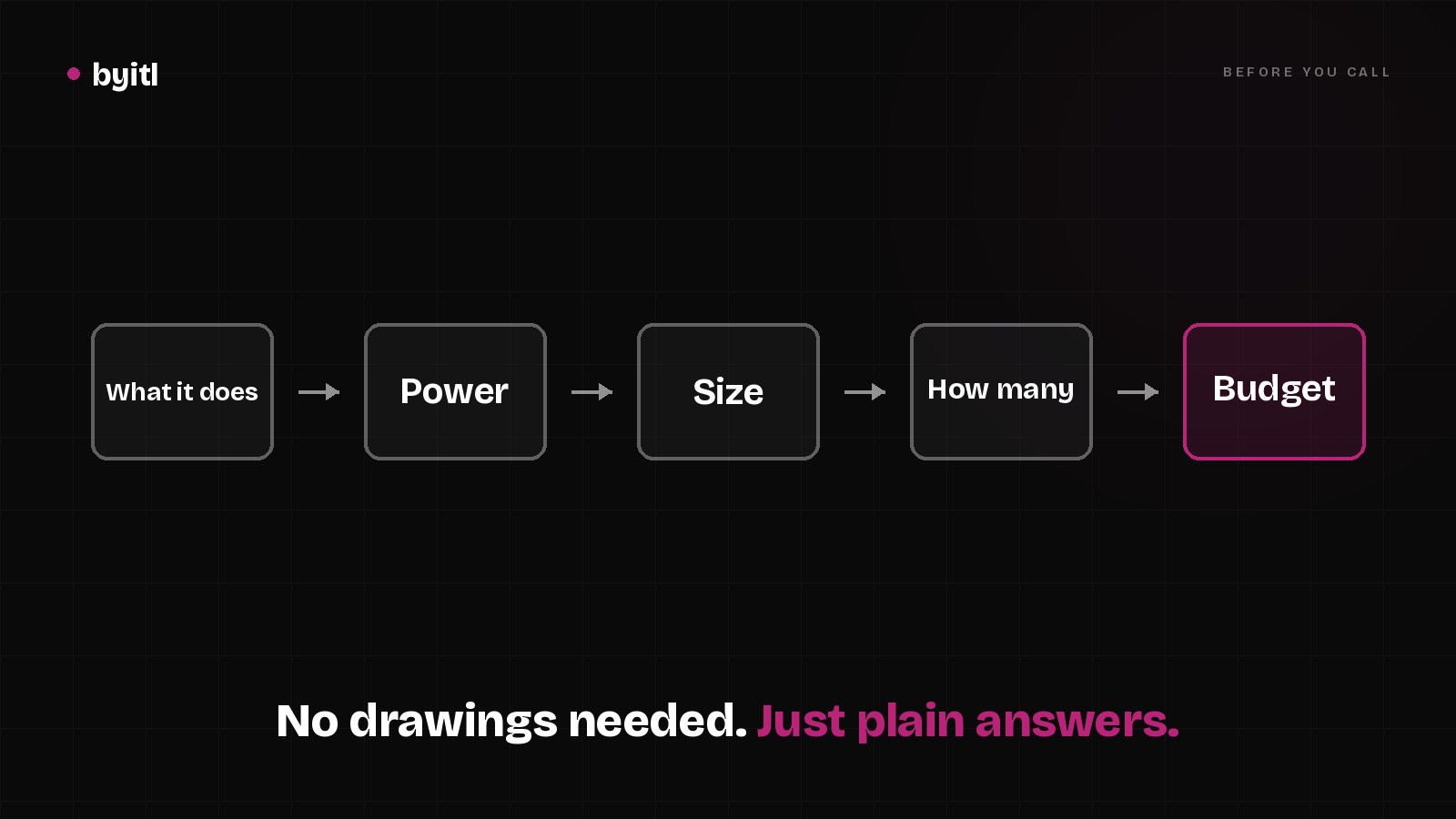
What to have ready before you talk to a prototype engineer
No CAD needed. Write down what it does, where it lives, its power, size, how many you need and your budget. A 15-minute call turns that into a quote.
· 7 min read
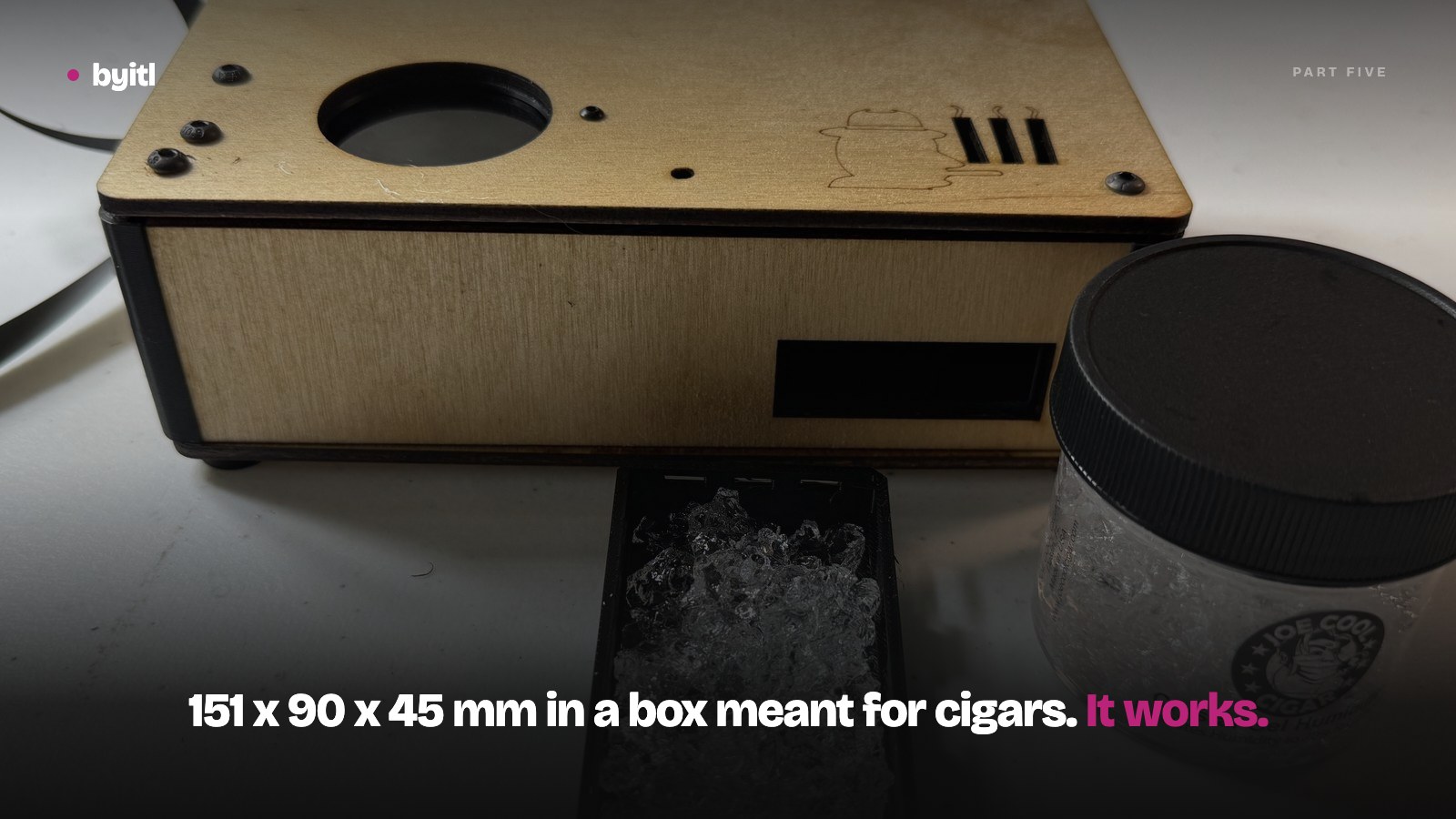
It works. It is also too big.
Part five. HC-01 is running in a real humidor: 522 logged samples, agreement with an independent hygrometer, and one closed control loop.
· 6 min read
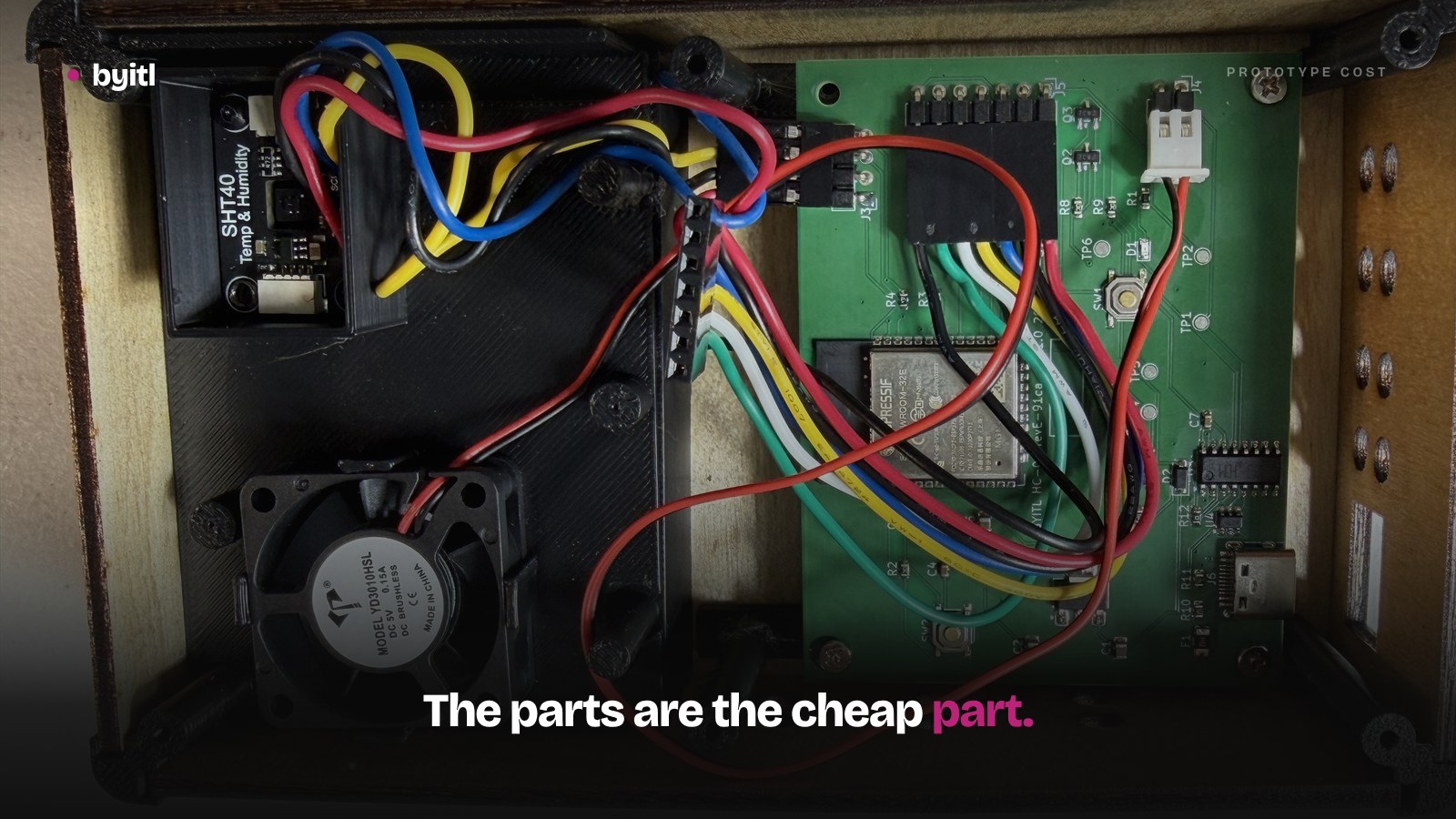
What it costs to prototype an electronic product
A working prototype of a new electronic device costs thousands, not hundreds. Here is what sets the price, and what byitl charges.
· 4 min read